Getting a product to market. It seems so simple for the end consumer. For a wine, you pop down to your local Wine Warehouse store, the wine is then boxed up, carried to your car and enjoyed when you get home. However, there are many unseen hurdles that need to be cleared for the juice of crushed and fermented grapes to make it to your dinner table. From grape to glass there are a number of mouths to feed in the food chain of wine. The ability to become more efficient with these various costs is what we strive to do and what we base our model upon at the Wine Warehouse. This efficiency is how we bring value to you the consumer and the reason why shopping at the Wine Warehouse means that you will ‘never pay retail again.’
As the Wine Warehouse is currently at 19 stores with expansion plans for 2007 and beyond, we have reached a volume level to be able to receive extremely favorable prices. As with most things in the business world, volume equals lower prices. Our 50,000 square foot temperature controlled warehouse is equipped to handle volume purchases while assuring that your wine stays in top condition.
Have you ever wondered how we at Wine Warehouse are always below the prices of the ‘big box’ retailers? It is by working the wine efficiency model as best we know how. We do this without having a PR machine beat its chests with the claim of being the largest seller of wine in the US or by taking out full page ads in the paper with a smattering of branded items at enticing prices (though still not as low as ours) and then try and switch you to brands that you have never heard of and which represent no real value at all. Our stores are locally owned and operated, convenient to your homes and are run by a staff of people who have a passion for wine.
 Let me hit you with some knowledge! The fixed costs from grape to glass are the taxes. Federal tax is just over $3 per 9 liter case, Florida state tax is $5.35 and then there is your local tax at the register. The variables begin with the cost that the case of wine leaves the winery at, the freight charges and the clearing fees by a wholesaler. The ‘food chain’ of wine can be as cumbersome as going from the grape-grower to the winery, then through an agent or importer, then to a wholesaler and then through a retailer or a restaurant. When the variable costs go down, the landed cost will be less and thus there will be a lower price to the ultimate consumer.
One might think that buying direct from a winery is the most efficient way to purchase wine. This is not necessarily so. How does wine get priced by its producers? On the winery front, a friend of mine who is the comptroller for a group of Australian wineries gave me the return on investment that they will receive from the various forms of getting wine to market. They will sell at various prices to their various methods of distribution with the hope of keeping similar end pricing. They would sell less expensively to export markets where there was an importer involved, a little higher to local wholesalers, a little higher to direct mail order specialists and higher again to their own tasting rooms. The returns on each sale were similar based on the costs involved. The tasting room had labor and rent expenses with relatively low volumes sold. The mail order business had higher volumes balanced against the costs of marketing and packing and shipping the wines. The wholesale volumes were higher again but there was a level of support needed for promotions and in the field help. Export markets combined for the largest volumes with most costs being absorbed by the various importers. Our model looks to get our base costs down to the importers price while minimizing the variable costs to bring a product in. This is one of the ways that we bring you the best prices everyday. Wine Warehouse has taken the next step as we are now working directly with the source.
So what does this have to do with Calamity and why the wine is named Calamity? A friend of ours in Napa called our founder, Tom Dorn, one day and alerted him about an opportunity to purchase some Cabernet Sauvignon from a top boutique producer. The only stipulation was that it had to be labeled with no reference to its source and that we could not say where the wine came from. Apparently the supply and demand curve chart of selling a $60 Cabernet was broken out and it was felt that there around 1000 gallons of top quality wine was not going to be sold based on the previous years sales. Tom felt that based upon the quality of the juice and the reputation of the winery, that this situation was a real calamity. Hence, we find the name Calamity on a wine label.
Each Calamity wine has its own story and origin. The common thread that runs through all the Calamity wines is the combination of fine quality at a fantastic value. Let’s introduce you to a few of the new releases.
As the Wine Warehouse is currently at 19 stores with expansion plans for 2007 and beyond, we have reached a volume level to be able to receive extremely favorable prices. As with most things in the business world, volume equals lower prices. Our 50,000 square foot temperature controlled warehouse is equipped to handle volume purchases while assuring that your wine stays in top condition.
Have you ever wondered how we at Wine Warehouse are always below the prices of the ‘big box’ retailers? It is by working the wine efficiency model as best we know how. We do this without having a PR machine beat its chests with the claim of being the largest seller of wine in the US or by taking out full page ads in the paper with a smattering of branded items at enticing prices (though still not as low as ours) and then try and switch you to brands that you have never heard of and which represent no real value at all. Our stores are locally owned and operated, convenient to your homes and are run by a staff of people who have a passion for wine.
 Let me hit you with some knowledge! The fixed costs from grape to glass are the taxes. Federal tax is just over $3 per 9 liter case, Florida state tax is $5.35 and then there is your local tax at the register. The variables begin with the cost that the case of wine leaves the winery at, the freight charges and the clearing fees by a wholesaler. The ‘food chain’ of wine can be as cumbersome as going from the grape-grower to the winery, then through an agent or importer, then to a wholesaler and then through a retailer or a restaurant. When the variable costs go down, the landed cost will be less and thus there will be a lower price to the ultimate consumer.
One might think that buying direct from a winery is the most efficient way to purchase wine. This is not necessarily so. How does wine get priced by its producers? On the winery front, a friend of mine who is the comptroller for a group of Australian wineries gave me the return on investment that they will receive from the various forms of getting wine to market. They will sell at various prices to their various methods of distribution with the hope of keeping similar end pricing. They would sell less expensively to export markets where there was an importer involved, a little higher to local wholesalers, a little higher to direct mail order specialists and higher again to their own tasting rooms. The returns on each sale were similar based on the costs involved. The tasting room had labor and rent expenses with relatively low volumes sold. The mail order business had higher volumes balanced against the costs of marketing and packing and shipping the wines. The wholesale volumes were higher again but there was a level of support needed for promotions and in the field help. Export markets combined for the largest volumes with most costs being absorbed by the various importers. Our model looks to get our base costs down to the importers price while minimizing the variable costs to bring a product in. This is one of the ways that we bring you the best prices everyday. Wine Warehouse has taken the next step as we are now working directly with the source.
So what does this have to do with Calamity and why the wine is named Calamity? A friend of ours in Napa called our founder, Tom Dorn, one day and alerted him about an opportunity to purchase some Cabernet Sauvignon from a top boutique producer. The only stipulation was that it had to be labeled with no reference to its source and that we could not say where the wine came from. Apparently the supply and demand curve chart of selling a $60 Cabernet was broken out and it was felt that there around 1000 gallons of top quality wine was not going to be sold based on the previous years sales. Tom felt that based upon the quality of the juice and the reputation of the winery, that this situation was a real calamity. Hence, we find the name Calamity on a wine label.
Each Calamity wine has its own story and origin. The common thread that runs through all the Calamity wines is the combination of fine quality at a fantastic value. Let’s introduce you to a few of the new releases.

Calamity Petit Verdot 2004. This is a variety that has a nice reputation but is often blended into a Meritage or Cabernet Sauvignon blend. Petit Verdot typically has some nice structure, dark color and full blown flavors. We were only able to secure 130 cases of this wine and we still happily jumped at the opportunity. The PV was sampled it upon its arrival to our warehouse and we were impressed. We were even more impressed when we tasted it three days later. This can be a keeper but is quite showy now.
Produced from 100% Petit Verdot. This grape generally adds color, spice and lift to a Meritage blend. Dark black fruit color with a bouquet of black cherries, fresh violet-tinged currant flavor and vanilla. On the palate the black cherry fruit combines with flavors of spicy gumdrops and ends with silky vanillan overtones.
Calamity Petit Verdot 2004, Retail $29.99 Warehouse $19.99

Calamity Cabernet Sauvignon ‘Sidney Frank Vineyard’ Alexander Valley 2004. This Cabernet Sauvignon hails from the vineyard of Grey Goose Founder and Jaegermeister importer, Sidney Frank. You may be aware that Mr. Frank had sold Grey Goose to Bacardi for five billion dollars. If I had a spare ‘five bil’ I might be planting myself a vineyard as well. Unfortunately Mr. Frank passed away this year so we asked if we could put the Sidney Frank vineyard name on the bottle in his memory. The winery agreed and therefore we have our first non-Napa Calamity bottling. This is from the Alexander Valley, the home of many fine Cabernets.
This wine sports classic Cabernet flavors and aromas of cassis, cedar and sweet red fruits. On the palate these flavors combine with vanilla from the oak barrels for a long and delicious finish. Excellent structure, depth and concentration, a seductive wine that has a complex ripe plummy-smoky and berry finish with soft tannins on a full finish.
Calamity Cabernet Sauvignon ‘Sidney Frank Vineyard’ Alexander Valley 2004, Retail $17.99 Warehouse $12.99

Calamity Zinfandel 2005. This wine is a custom crush. Produced from old Zinfandel vines in Calistoga, the nice thing about this Zin is the elegance and grace it has while showing off its overt fruit. Many Zins in the market give you over the top and raisiny characters, this wine is a cross between the flavors and color of Zinfandel with the texture and character of a nice Cabernet.
Cedar, vanilla and coconut macaroon aromas dominate, accented by plum and wild berry flavors ripe, cherry, raspberry and cassis flavor with a nice touch of earthiness, very good balance with a fleshy texture and a long, full, fruity finish.
Calamity Zinfandel Napa Valley 2005, Retail $19.99 Warehouse $14.99

Calamity Chardonnay ‘Carneros’ 2005. Besides this wine coming off of vines in a fantastic part of the Napa Valley, the fermentation was done on natural yeasts that tend to ferment out slower and gives a rich glycerol coating to the palate. This Chardonnay is extremely fresh, but the texture and flavors are a mouthful.
An absolutely fresh and vibrant Chardonnay. This wine has characters of pear, tropical fruits and vanilla jumping out of the glass.. Ripe and complex, turning elegant and creamy, with lots of peach, pear, fig and nectarine flavors that are smooth and plush.
Calamity Chardonnay ‘Carneros’ 2005, Retail $21.99 Warehouse $14.99
Other Calamity offerings:
Calamity Chardonnay ‘Napa Valley’ 2004, Retail $21.99 Warehouse $14.99 Buy 3 and get 1 free nets to $11.25. This will not last long as we are on our last 100 cases.

There may be a smattering of the original Calamity Napa Cabernet Sauvignon 2003, Retail $59.99 Warehouse $24.99 left in a few of the stores.
Be on the lookout for many new terrific offerings in the ‘new year.’
Have a safe and bloggy holiday.


 The Douro might be Portugal’s answer to Spain’s Priorat and France’s Roussillon region, is located in Northeastern Portugal. Historically, the region was the country’s port-producing center, with the city of Oporto as the worldwide seat of the port industry. Now, a few great producers are creating dry bottlings from these same grapes to startling success. Many of these parcels are field blends, with several varietals planted alongside each other.


 Let me hit you with some knowledge: Traditionally used to compensate or underripeness in cool winegrowing regions, ‘enrichment’ encompasses the addition of sugar, grape must, or concentrated grape must to a wine. Enrichment is the counterpoint to acidification which is the norm in hot regions. Sucrose is the usual enrichment material used. In northern Europe this has normally been refined sugar beet, or occasionally cane sugar.

 Domaine Saint Nicolas (Fiefs Vendeens) With vineyards just a stone's throw from the Atlantic ocean, the Fiefs Vendeens is the southernmost of the Loire’s wine growing regions, located about an hour south of Nantes (Muscadet). Domaine St. Nicolas, run by the dynamic Thierry Michon, is one of the few certified biodynamic vineyards in the Loire, and is planted to Chenin, Pinot Noir, Gamay, and other varietals planted mostly on pink slate and quartz. These wines are pure examples of terroir, often expressing the salinity of the nearby sea and the minerality of the slate on which they are planted.

 Domaine Vincent Ogereau The picture above shows Vincent Ogereau on the left, with Jon-David on the right. Just south of the Loire river from Savennieres, the area of the Anjou where Vincent Ogereau produces Chenin Blanc is composed of the same dense slate that Savennieres is planted on, giving the wine of this tiny part of the Anjou the same density and minerality. There may be some of the Anjou Blanc left in our shops. Our current arrival is the 03 Anjou rouge produced from Cabernet Franc grapes. This is organically farmed, undergoes a long maceration and spends 12 months in barrel.





 Are wineries harvesting riper? A two-year survey was conducted by the Napa County UC Cooperative Extension to determine the amount of weight loss in grapes that have experienced extended ripening. It was concluded that growers lose money when their contracted clients insist on the practice of hang time. Winemakers are trying to coax as much sugar and maturity out of the grapes as possible. But, by doing so, growers have complained that as sugar levels increase, their grapes dehydrate, which results in weight loss, and therefore clients have been getting away with paying less. A new system is being worked out to add costs to a winery once the sugar levels go past a pre-determined degree. Some vineyard owners just sell by the acre
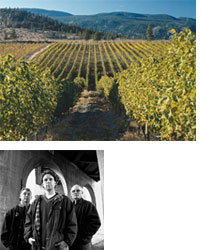
 The Cape Barren Winery is located in Brookman’s Road, Blewitt Springs in the Mediterranean-style appellation of McLaren Vale. McLaren Vale experiences moderate temperatures throughout the year, with warm and dry spring and summer days ideal for growing high quality grapes. Cape Barren soils have deep sand over ironstone and clay subsoil perfect for holding moisture. I had mentioned the Old Vine Shiraz in a previous blog. This and the GSM are blue fruit bombs. These are impressive!
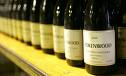 Established in 1970, Brokenwood Wines has evolved from a weekend venture for self-professed hobby winemakers into one of Australia's most reputable wine labels. Brokenwood was established by a trio of Sydney-based solicitors who then paid a record price of $970 per acre for a 10-acre block in the foothills of the Brokenback Ranges. The original block, initially planned as a cricket round for the local community (hence the Cricket Pitch blends) was planted with the Cabernet Sauvignon and later Shiraz.


 So why am I writing about marketing and branding and not the wines themselves? It’s because the Champenois are some of the most sophisticated and ruthless marketers in the world. Just try and launch a product, any product with the word Champagne in the moniker. Be prepared to be served papers and to be heading to court. The Champenois protect their region’s name fiercely, and have done so to great success. In the EU, sparkling producers can no longer state ‘Methode Champenois’ on their labels. The new term for making sparkling wine in the EU in Champagne method is now ‘Methode Traditionelle.’ Who’s to argue with the protectionist ways of the Champenois when Champagne is most likely the world's most famous wine, and one that is most associated with a celebration? Champagne is one of the few categories in French wine to actually show growth around the world. The top Champagne houses put 95% of their profits back into marketing. What other wine category do you know of where diners can be recognized for their choice across a dining room by the shape of the bottle or the color of a label? Although for me, it also makes it easy to spot the pretenders. If I spot someone drinking from an orange/yellow label from across the room, they have just been labeled as a ‘victim of marketing.’ While many French grape farmers and winemakers are protesting their government’s lack of support, the Champenois biggest problem is trying to figure out whether they will be buying a blue or silver Mercedes this year. Ok, well maybe this is a bit of an exaggeration, but have you seen the direction Champagne prices have gone since the millennium push? As it is Champagne season, we’d better get to the wines.


 Bollinger has been awarded the Royal Warrant by seven British monarchs since 1884, so Bond pledged his loyalty to Bollinger. In 1829, Champagne Bollinger introduced an instantly recognizable, dry, toasty style that connoisseurs around the globe are said to have coveted ever since. Six generations of the Bollinger family have maintained the house style, and Bollinger is rare in that it is one of the few Grande Marque houses to be owned, controlled and managed by the same family since it was founded.