30 November, 2006

‘Freedom of choice.’ Are you really required to buy that 95 point wine that is under $20?

‘a victim of collision on the open sea
nobody ever said that life was free
sank, swam, go down with the ship
but use your freedom of choice’
Devo

If 15 is the new 14, what do we do about 16.5?

The review came out. There was a slight rumbling from our most ardent ‘Parkerophiles.’ We were able to secure a reasonably healthy allocation of the basic wines and bottles of the higher priced ones. Then they arrived. Nice labels. Cute! I very slowly and carefully turned to the back-label as I have learned to do with a Sparky Marquis wine. There it was! It was just as I had suspected. I was aghast! 16.0! The next type, 16.0! The next type, 16.5! Oy! What are people going to do with these things? These alcohol levels are setting new records. The Carnival of Love review from Parker reads ‘Great purity, symmetry, and harmony as well as remarkable balance for such a rich, intense wine, as it sat in the glass espresso, vanillin, white chocolate, and additional black fruits also emerged,’ 99 points. Sorry, but at 16.5% the wine should be re-named ‘The Carnival of Sleep.’ How do you past the first glass of this stuff? Then weighing in at 16.0%, ‘The Boxer’ reviews as ‘an incredible density of fruit along with that tell-tale purity, blackberries, white flowers, melted chocolate, sweet licorice, and subtle wood. Full-bodied, beautifully textured and layered with an awesome finish,’ receiving a 95 point score by Parker and a Top 100 in The Wine Spectator for calendar year 2006 while retailing for $20. My wife’s comments on the wine differed. I always taste her on things blind to get an objective view. ‘What IS that? It tastes like cough medicine. That’s just not pleasant to me.’ This is from a lady who is not afraid of high powered Zins. The quick jump to buy a wine with a score without any prior experience with the wine reminds me a bit of a Bob Johnson wine cartoon. In the cartoon the store customer tastes a wine, makes a face and says 'Geez that's repulsive.' The wine shop owner calmly states that 'The Wine Advisor gave it a 96.' The customer then quickly says 'I'll Take a case.' Having polled a few of our stores, our customers have not complained. One customer said that the wines are just tight. The wines that he shipped in from California a few months back are now starting to come around. Personally I don’t see how? The fruit is nice, but the alcohol overwhelms the fruit in the bouquet and the 16% gave a burn to the back of my throat. However, I must admire a person ‘sticking by their guns’ with their ‘glass half-full’ by believing in their purchase. There is another cute name in this line of wines called ‘Enchanted Path.’ My suggestion should Sparky choose to do a line extension and the alcohols continue to remain high is to call the next wine ‘The Designated Driver.’

Let me hit you with some knowledge: Grape sugar levels are measured by different countries in units of brix, baume and oeschle. Simply multiply your Brix reading by 0.55. Now, because yeasts differ and their living conditions vary, the exact amount of alcohol produced will waver, more or less. But this is the general picture: Brix X 0.55 = % alcohol. One unit of Baume is equivalent to 1.8 degrees Brix. Oechsle is the unit used in Germany and Switzerland to measure the sugar content of must, the unfermented liquour from which wine is made. One degree Oechsle (or Öchsle) is roughly equivalent to 0.2% sugar by weight. Alcohol in wine is produced by the conversion of the grapes must sugars by yeasts.

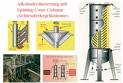
We can go on and on about why alcohol levels in wine have been and are still increasing. The truth is that people are harvesting at riper levels. The documentary film Mondovino blames the influence of wine-writer Robert Parker. Darker colored reds with higher extract usually do get better reviews. The environmentalists blame ‘global warming.’ We are in a period where temperatures are rising around the globe just as it was in the 1500’s. With more heat, there is more ripeness. There are other possibilities for higher alcohol levels in wine. New vine clones are very efficient at ripening grapes. Various grape trellises are suited to vineyard sites to optimally ripen grapes. Green harvesting can reduce the crop load and quicken ripening of the remaining bunches. New commercial yeasts in the winery are extremely efficient and can now ferment to higher alcohol levels without stopping. Premium wineries are hesitant to harvest grapes with any green in their seeds. There are many new plantings. Young vines generally need to have higher sugars in their grapes to lose the green pips. Then there are the tricks………. One can extract water from grape must by reverse osmosis, the spinning cone or by cryo-extraction. Less water means higher sugars. Many top Chateaus in Bordeaux have a Reverse Osmosis machine on site. Higher sugar means more potential alcohol. One famous California winemaker is rumored to add concentrated Cabernet Sauvignon grape must to her Cabernets. Excess alcohol can then be removed by the spinning cone or by reverse osmosis. But the machines can only remove the alcohol up to a point without the wine seeming disjointed.
Are wineries harvesting riper? A two-year survey was conducted by the Napa County UC Cooperative Extension to determine the amount of weight loss in grapes that have experienced extended ripening. It was concluded that growers lose money when their contracted clients insist on the practice of hang time. Winemakers are trying to coax as much sugar and maturity out of the grapes as possible. But, by doing so, growers have complained that as sugar levels increase, their grapes dehydrate, which results in weight loss, and therefore clients have been getting away with paying less. A new system is being worked out to add costs to a winery once the sugar levels go past a pre-determined degree. Some vineyard owners just sell by the acre and not by the ton. They calculate what a good return is based upon tons of grapes per acre, then the winery is free to request as much green harvesting or hang time as they choose. Marc Kent of Boekenhoutskloof in South Africa has been called the ‘King of SA Syrah’ by Jancis Robinson. He says that he looks for ‘old man’s face’ or slight dehydration in his Syrah grapes before harvesting. Sparky must be looking for ‘Rip Van Winkle.’
We have just received another container of the Click Imports Australian wines. The alcohol levels on these offerings are much more in check than the above examples. Balance rocks! Speaking of rocks……………….

Rockbare
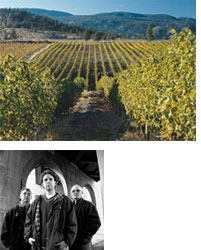
Approximately 25 miles from Adelaide’s back door is the McLaren Vale wine district. RockBare's winemaker, Tim Burvill, has established strong relationships with grape growers throughout the vale. So he has his choice of the best grapes the area has to offer. He then uses a winemaking process without a lot of handling or manipulation. The idea is to get the best grapes and let the fruit speak for itself. Tim Burvill gained extensive winemaking experience working at Southcorp, where he was responsible for making one of Australia's most expensive premium chardonnays, Yattarna. So Tim knows all the most modern winemaking techniques. But when Tim created the RockBare label in 2000, he made a conscious decision to incorporate winemaking techniques that go back a hundred years or more. Using a minimal-filtering or no-filtering approach and very little oak ageing, Tim makes wines that are filled with complex flavors driven by the fruit. McLaren Vale is most famous for its Shiraz. One taste of RockBare's Shiraz and you know why. It has a deep, intense color and a peppery taste with hints of licorice.

The fruit for the Rockbare Reserve Chardonnay 2003 comes off one of the original Penfolds Yattarna Vineyards. The 20-year-old vines are nestled in a particularly cool part of the Adelaide Hills. This allows for the slow and maximum flavor development in the berries during ripening. The wine underwent 66 percent barrel fermentation, 50 percent malolactic fermentation and was stored for 10 months on lees with battonage. In 2003 there was a nationwide drought; extreme heat in some regions; widespread rains in February; and low fruitfulness in cool-climate areas. As a result Adelaide Hills had low crops with very intense, yet elegant flavors.

The superb 2003 Chardonnay Reserve exhibits a slight greenish hue to its color along with notions of peach, lemon blossom, orange rind, and a nutty, brioche-like component. Medium to full-bodied, with a fabulous texture as well as a long finish, it is reminiscent of a New World version of a premier cru Chassagne-Montrachet from the likes of Michel Niellon. 91pts Wine Advocate. 13.0% alcohol.

Rockbare Reserve Chardonnay 2003, Retail $24.99 Warehouse $19.99

Rockbare’s regular Chardonnay employs cool fermentation over four weeks, 40 percent maloactic fermentation, maturation on yeast lees for five months.

The remarkable Rockbare 2005 Chardonnay sells for a song. It sees about 40% malolactic and includes 13% Semillon in the blend. A flamboyant perfume of lemon blossom, flowers, orange marmalade, and white peaches is followed by a wine with great weight in the mouth, gorgeous acidity, beautiful freshness, and a long, heady finish. This terrific Chardonnay blew me away. 92 points Wine Advocate. 13.5% alcohol.

Rockbare Chardonnay 2005, Retail $15.99 Warehouse $12.99

Rockbare’s Reserve Shiraz is made predominantly from 140-year-old Barossa Valley Shiraz vines. Warm fermentation in small open fermenters. Spent 18 months storage in oak (70 percent new French oak barrel, 30 percent new American oak barrels).

Structured, massive, and backward is the 2001 Shiraz Reserve, whose major component emerges from a 100-year plus vineyard. Its deep plum/ruby color is followed by aromas of figs, plums, black currants, berries, licorice, and pepper. This full-bodied, powerful, moderately tannic, rich Shiraz requires 1-2 years of cellaring. 91 points Wine Advocate. 15.5% alcohol. OK, this is a bit over the top……………

The 2002 Rockbare Shiraz Reserve is a blockbuster-styled Shiraz. Its dense purple color is accompanied by gorgeous aromas of toasty oak intermixed with licorice, spice box, blackberries, and figs, fabulous concentration, a huge, muscular yet silky-textured, opulent mid-palate, and an explosive finish. Enjoy this knock-out Shiraz over the next 10-12 years. 92 points Wine Advocate. 14.0% alcohol.

Rockbare Shiraz Reserve 2002, Retail $33.99 Warehouse $26.99

Rockbare Shiraz Reserve 2001, Retail $33.99 Warehouse $26.99

Rockbare’s regular Shiraz is hand harvested from very old vines and machine harvested from old vines. Warm fermented on skins for 10 to 14 days at 22ºC. Aerobic fermentation, gentle pressing of the skins using airbags and maloactic fermentation in the barrel. Matured 14 months in the barrel. 2/3’s new French oak with the remainder predominantly new American oak.

A beautiful, pure, intense, concentrated effort is the Rockbare 2004 Shiraz. A deep ruby/purple color is accompanied by aromas of mocha, white chocolate, black cherries, and cassis. This full-bodied, opulent, gorgeous Shiraz can be enjoyed over the next 5-6 years. 90 points Wine Advocate. 14.5% alcohol.

Rockbare Shiraz 2004, Retail $16.99 Warehouse $12.99

Cape Barren The Cape Barren Winery is located in Brookman’s Road, Blewitt Springs in the Mediterranean-style appellation of McLaren Vale. McLaren Vale experiences moderate temperatures throughout the year, with warm and dry spring and summer days ideal for growing high quality grapes. Cape Barren soils have deep sand over ironstone and clay subsoil perfect for holding moisture. I had mentioned the Old Vine Shiraz in a previous blog. This and the GSM are blue fruit bombs. These are impressive!

This has tremendous presence, pouring out its blueberry, plum, vanilla and dark chocolate flavors into a plush stream that lets the flavors sail on and on. Tannins are well-submerged, and the structure feels like it could carry the intense flavors this easily for a long time. Only 224 cases of this made it into the US. 92 points Wine Spectator. 14.5% alcohol.

Cape Barren GSM 2004, Retail $23.99 Warehouse $19.99

Brokenwood Established in 1970, Brokenwood Wines has evolved from a weekend venture for self-professed hobby winemakers into one of Australia's most reputable wine labels. Brokenwood was established by a trio of Sydney-based solicitors who then paid a record price of $970 per acre for a 10-acre block in the foothills of the Brokenback Ranges. The original block, initially planned as a cricket round for the local community (hence the Cricket Pitch blends) was planted with the Cabernet Sauvignon and later Shiraz.
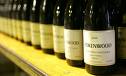
A dynamite value in dry, fragrant, tasty white wine is the Brokenwood 2004 Cricket Pitch White, a blend of 55% Sauvignon Blanc and 45% Semillon that was fermented and aged in stainless steel prior to bottling. Elegant aromas of lemons, limes, white peaches, and orange rinds emerge from this crisp, medium-bodied, well-made dry white. 86 points Wine Advocate. 13.0% alcohol.

Brokenwood Cricket Pitch White 2004, Retail $15.99 Warehouse $12.99


Brokenwood Cricket Pitch Red 2002, Retail $15.99 Warehouse $12.99

Brokenwood 2002 Area Blend, a 100% Shiraz aged in primarily American oak. Earthy, with hints of fresh mushrooms, black cherries, underbrush, and cassis, this medium-bodied, somewhat rustic effort reveals slightly jagged edges. 88 points Wine Advocate. 14.0% alcohol.

Brokenwood Area Shiraz 2002, Retail $27.99 Warehouse $22.99

Nepenthe

Throughout many of the premium vineyards of South Australia you'll find large signs which read "Nepenthe Viticulture." That's because Nepenthe is widely known as the premier cool-climate viticultural management company in South Australia. In the past decade, Nepenthe wines have made a huge splash in the premium, cool-climate Australian wine scene. Nepenthe is located in the Lenswood area of the Adelaide Hills, one of the premier cool climate wine regions in Australia. The vineyards are on beautiful, wooded rolling terrain that is only a 40-minute drive from the center of Adelaide. With an altitude above 1,200 feet, plentiful rainfall, and deep, well-drained soils, the vineyards are ideal for cool climate varieties such as chardonnay, pinot noir and sauvignon blanc.

The sumptuously rich, but light on its feet Nepenthe 2005 Tryst White is a gorgeous blend of 59% Sauvignon Blanc, 36% Semillon, and 5% Pinot Gris. A stunning effort, it offers subtle aromas of spice, honeysuckle, citrus oil, and orange marmalade. 91 points Wine Advocate. 13.5% alcohol.

Nepenthe Tryst White 2005, Retail 14.99 Warehouse $11.99

Although the medium to dark ruby-hued Nepenthe 2004 Tryst red (a blend of 73% Cabernet Sauvignon, 17% Tempranillo, and 10% Zinfandel) spent 10 months in primarily French oak, it emphasizes fruit over structure and tannin, offering aromas of black currants, licorice, smoke, dried herbs, and sweet cherries and currants. It should drink well for 2-3 years. 87 points Wine Advocate. 13.5% alcohol.

Nepenthe Tryst Red 2004, Retail $14.99 Warehouse $11.99

The medium-bodied, crisp, tasty Nepenthe 2005 Sauvignon Blanc exhibits wonderful notes of melons, dried herbs, figs, and passion fruit. 88 points Wine Advocate. 13.0% alcohol.

Nepenthe Sauvignon Blanc 2005, Retail $15.99 Warehouse $12.99

Sticks

Winemaker Rob 'Sticks' Dolan crafts these wines from fruit grown on premium vineyards in Victoria's Yarra Valley. The Yarra Valley is unquestionably one of Australia's leading producers of super-premium, cool-climate wine. The region is cooler than Bordeaux but warmer than Burgundy. Its long ripening period allows sugar levels to rise gradually while still retaining natural acidity, resulting in excellent flavors and acid balance.

This cool-climate offering, which is versatile with an assortment of foods, emphasizes the varietal’s fruit, and possess good nuances as well as surprising elegance. For example, the Sticks 2004 Chardonnay exhibits plenty of pear, lemon blossom, pineapple, and mineral characteristics. It is an excellent, medium-bodied Chardonnay with surprising flavor depth and length. Drink it over the next 1-2 years. 88 points Wine Advocate. 13.0% alcohol.

Sticks Chardonnay 2004, Retail $16.99 Warehouse $12.99

This cool-climate offering, which is versatile with an assortment of foods, emphasizes the varietal’s fruit, and possess good nuances as well as surprising elegance. Sticks’ 2004 Pinot Noir reveals aromas of herbs and tart cherries, medium body, and a spicy, earthy finish. 84 points Wine Advocate. 13.0% alcohol.

Sticks Pinot Noir 2004, Retail $16.99 Warehouse $12.99

Kangarilla Road

Kevin O’Brien’s wines were featured here several weeks ago. We have just received more in. Kevin will be back in Florida to taste his wines with us in January. Before creating the Kangarilla Road vineyard and winery, Kevin was a winemaker educated at the highly regarded Roseworthy College in Adelaide. Kangarilla Road is located in the McLaren Vale district west of the Adelaide Hills and east of the Gulf of St. Vincent. This is an area known for its mild, Mediterranean-style climate. And his vineyard is situated on a higher, and therefore slightly cooler plateau than many others in the region. Rainfall is plentiful in winter; and summers are generally warm and sunny with low humidity. The terrain is gently rolling hills and the soils are predominantly deep alluvial hard red loam complex soils. The soils drain well but hold deep winter water that the vines draw from in summer.

The stunning Kangarilla Road 2004 Shiraz boasts deep mocha, blackberry, cherry, and white chocolate notes interspersed with hints of new oak (both French and American wood are used), pepper, smoke, and coffee. This rich, layered, tasty Aussie red can be drunk now and over the next 7-8 years. 92 points Wine Advocate. 14.0% alcohol.

Kangarilla Road Shiraz 2004, Retail $21.99 Warehouse $ 17.99

One of my favorite McLaren Vale wineries, Kangarilla Road offers very realistic prices for the quality of their wines. It is tough for Australian Zinfandel to compete with those from California. While some Aussie Zins are very good, prices are generally high, reflecting their rarity Down Under. Kangarilla Road’s very good 2004 Zinfandel Langhorne Creek reveals peppery fig and berry-like fruit, medium body, decent acidity, and a surprising elegance. It is ideal for drinking over the next 2-3 years. 87 points Wine Advocate. 14.0% alcohol.

Kangarilla Road Zinfandel Langhorne Creek 2004, Retail $16.99 Warehouse $13.99

Kangarilla Road does a beautiful job with Zinfandel, and the 2004 McLaren Vale possesses a dark ruby/purple color as well as a big, sweet, briery-scented perfume displaying hints of herbs, pepper, and spice. Aged in one-year-old French oak for 14 months, it reveals a powerful Zinfandel character. 89 points Wine Advocate. 15.5% alcohol. OK, the outer boundaries have been reached here too.

Kangarilla Road Zinfandel McLaren Vale 2004, Retail $32.99 Warehouse $25.99

A delicate, nuanced style of Kangarilla Road Viognier, the 2005 makes a mockery of many New World, tooty fruity, bubble gum type wines. Exceptional freshness, a mineral-like character, medium body, and plenty of peach, apricot, and citrus oil notes are present in this impressively endowed effort. 90 points Wine Advocate. 14.0% alcohol.

Kangarilla Road Viognier 2005, Retail $18.99 Warehouse $15.99

The 2002 Cabernet Sauvignon may be one of the best buys in Cabernet Sauvignon in the marketplace. A 100% Cabernet Sauvignon aged 18 months in both French and American oak, it exhibits a deep ruby/purple color as well as classic creme de cassis, toasty oak, and licorice characteristics. This dense, opulently textured, pure, rich, flavorful red reveals sweet tannin in addition to a long, velvety-textured finish. 91 points Wine Advocate. 14.0% alcohol.

The 2004 Cabernet Sauvignon (100% Cabernet Sauvignon) was aged in a combination of new and old French and American wood. This vintage’s long, cool growing season resulted in a wine with beautifully pure notes of black currants, mint, white chocolate, and spicy vanillin. Medium to full-bodied and super-rich with lovely purity, this is a polished, sophisticated Cabernet that should drink well for a decade or more. 91 points Wine Advocate. 14.0% alcohol.

Kangarilla Road Cabernet Sauvignon 2002, Retail $21.99 Warehouse $18.99
Kangarilla Road Cabernet Sauvignon 2004, Retail $21.99 Warehouse $18.99
Kangarilla Road Cabernet Sauvignon 2005, Retail $21.99 Warehouse $18.99

2 UP

This wine is a joint venture between importer Peter Click and winemaker Kevin O’Brien, who produces the youthful cuvees from McLaren Vale’s Kangarilla Road estate. The 2004 did not get reviewed, the 2005 review is as follows: This deep ruby/purple-tinged 2 Up Shiraz offers gorgeous aromas of sweet blackberries, figs, plums, and kirsch. Dense, opulent, and full-bodied, it is a terrific South Australian fruit bomb. Enjoy it over the next 2-3 years. It is the type of wine value that simply can’t be found in California. 90 points Wine Advocate. 14% alcohol.

2 UP Shiraz 2004, Retail $13.99 Warehouse $11.99

Campbell’s

We had discussed Campbell”s in a previous blog, but they are worth mentioning again as they are part of the Click portfolio. Campbells produces some of the world's finest and most intense dessert wines. This family-owned vineyard and winery uses a modified ‘solera’ method of blending and maturing new and old wines over a period of years. Some of the material used for blending is 70, 80, even 90 years old. The solera, originally made famous by the Spanish and Portuguese, is a series of up to seven casks, each containing wine at successive stages of maturation. The result is a uniformity of quality, age and concentrated character.
The unctuous, light amber-hued non-vintage Campbell’s Muscat exhibits a sweet, caramelized, raisiny character with notes of plums, fruitcakes, and marmalade. It is gloriously sweet yet relatively light on its feet. 93 points Wine Advocate. 17% alcohol. This wine is fortified with grape neutral spirits to arrest fermentation and retain natural sweetness.

Campbell’s Liqueur Muscat 375ml, Retail $18.99 Warehouse $14.99
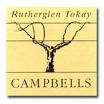
The non-vintage Campbell’s Tokay reveals hints of Chinese black tea interwoven with caramel, buttered nuts, prunes, and toffee. These wines rarely improve in the bottle, but even after 5-10 years, they do not reveal any signs of falling apart. 91 points Wine Advocate. 17% alcohol. This wine is fortified with grape neutral spirits to arrest fermentation and retain natural sweetness.

Campbell’s Tokay 375ml, Retail $18.99 Warehouse $14.99


Balance in wine is in the eye of the beholder as balance is essentially the difference in magnitude between opposing forces or influences. Vive la difference!

G'day from Monsieur Bloogy

23 November, 2006

It’s beginning to look a lot like ‘fizz-mas.’


You may have observed the stacks of bubbly being featured in our stores. It’s that time of year.

Couldn’t help but notice the branding in the latest James Bond movie as James orders Champagne from room service. Bollinger was ordered, but surprise………….it was the Grand Annee. When this many bucks were being spent on marketing to place this product in the movie, the marketers had to make sure that there is enough of the product available for consumers and RD is not produced in sufficient quantities to fit the bill. I just wonder which vintage of Château L’Angelus James consumed with his dinner after celebrating his winnings at the card table? Sean Connery would have certainly mentioned the Château and the vintage. The Grand Annee was ordered without a vintage as well. Sean is still the #1 Bond for wine consumers. Unfortunately for Sean Connery, he must concede the #1 ranking to Daniel Craig in the ‘six-pack abs’ department.
So why am I writing about marketing and branding and not the wines themselves? It’s because the Champenois are some of the most sophisticated and ruthless marketers in the world. Just try and launch a product, any product with the word Champagne in the moniker. Be prepared to be served papers and to be heading to court. The Champenois protect their region’s name fiercely, and have done so to great success. In the EU, sparkling producers can no longer state ‘Methode Champenois’ on their labels. The new term for making sparkling wine in the EU in Champagne method is now ‘Methode Traditionelle.’ Who’s to argue with the protectionist ways of the Champenois when Champagne is most likely the world's most famous wine, and one that is most associated with a celebration? Champagne is one of the few categories in French wine to actually show growth around the world. The top Champagne houses put 95% of their profits back into marketing. What other wine category do you know of where diners can be recognized for their choice across a dining room by the shape of the bottle or the color of a label? Although for me, it also makes it easy to spot the pretenders. If I spot someone drinking from an orange/yellow label from across the room, they have just been labeled as a ‘victim of marketing.’ While many French grape farmers and winemakers are protesting their government’s lack of support, the Champenois biggest problem is trying to figure out whether they will be buying a blue or silver Mercedes this year. Ok, well maybe this is a bit of an exaggeration, but have you seen the direction Champagne prices have gone since the millennium push? As it is Champagne season, we’d better get to the wines.

Champagne is the most northerly wine region in France. Champagne is usually made from a blend of grapes sourced from different vineyards across this large region, yet at the Wine Warehouse we have a nice selection of ‘grower’ Champagnes being produced from a specific place. The grape varieties used in Champagne are Chardonnay, Pinot Noir and Pinot Meunier. Approximately three quarters of all Champagne sold is designated as 'non-vintage': this is a blend of vintages (predominantly the most recent) and can vary widely in quality depending on the producer. Champagne from a single vintage is designated 'vintage', and is produced in lower quantities and only in the better years, so it is usually much higher quality. Other styles to look out for on the label include Blanc de Blancs (made from Chardonnay only) and Blanc de Noirs (made only from the red grapes Pinot Noir and Pinot Meunier).

Let me hit you with some knowledge: Developed in the Champagne region, the traditional method of making sparkling wine consists of blending various still wines to make a cuvee representative of the house’s style. After the wines are blended, a bottling dosage and special yeasts are added, and the cuvée is immediately bottled and corked. The yeast and sugar in the dosage create a secondary fermentation in the bottle, producing additional alcohol and carbon dioxide gas, which gives the wine its effervescence. Sediment produced during the second fermentation is removed through riddling (or rémuage), a process which the bottles are positioned downward at a 45° angle in specially built racks called pupitres. Every 3 or 4 days, a trained workman gives the bottles a shake and a slight turn, gradually increases the angle of tilt, and drops the bottle back in the rack with a slight whack. In 6 to 8 weeks, all the bottles are positioned straight downward and the sediment has collected in the neck. Although riddling was once done entirely by hand, today many wineries employ ‘gyro-palettes’ that dramatically shorten this lengthy procedure. After the riddling process is complete, the disgorging (or dégorgement) takes place. Disgorging is where the sediment is removed from the bottle. Just before final bottling, a ‘shipping dosage’ (dosage d'expedition) containing sugar and some of the same cuvée is added. The percentage of sugar determines the degree of the wine's sweetness.


Bollinger has been awarded the Royal Warrant by seven British monarchs since 1884, so Bond pledged his loyalty to Bollinger. In 1829, Champagne Bollinger introduced an instantly recognizable, dry, toasty style that connoisseurs around the globe are said to have coveted ever since. Six generations of the Bollinger family have maintained the house style, and Bollinger is rare in that it is one of the few Grande Marque houses to be owned, controlled and managed by the same family since it was founded.

With 399 acres of vineyards situated in the best of the Grands Crus and Premiers Crus villages, Bollinger relies on its own estate for nearly two-thirds of its grape requirements, the majority being Pinot Noir which gives its Champagne its distinctive roundness and elegance. Bollinger is one of a select few houses that can control the quality of its grape supply. This is why Bollinger can maintain its character and integrity.

Bollinger Special Cuvée NV, Champagne is a blend of 60% Pinot Noir, 25% Chardonnay and 15% Pinot Meunier. Special Cuvée is meant to be the purest expression of Champagne Bollinger's style. Bollinger’s winemaker is expected to year after year, create a blend that is consistent both in style and quality. This NV Champagne has tremendous depth and balance, with rich and toasty aromas and flavors. This wine is fermented in both wooden casks and stainless steel. The top cuvees from Bollinger are fermented in wood only. Previous director of Bollinger, Christian Bizot was said to refuse to sit in the same church pew with a producer who does not ferment their wines in wood.

Bollinger Special Cuvee Brut, Retail $49.99 Warehouse $34.99

Louis Roederer was founded in 1827. Initially, Roederer’s biggest customers were the Russians, and with the 1917 revolutionaries not being Champagne socialists, Roederer lost 80% of their market overnight. Cristal itself was commissioned in Tsar Alexander II, who wanted his wine in clear glass: Cristal comes in similar clear, puntless bottles to this day. The celebrated Cristal, has recently become chic with the likes of professional athletes and the hip-hop crowd. Although Cristal may now be ultra-trendy, there’s substance behind the style. Roederer also does a commendable job with its other wines. Much of the secret to this success, is Roederer predominantly using grapes from their own vineyards. Their 450 acres of vineyards make up nearly 80% of their production. This is why Bollinger and Roederer stand out from many of their competitors.

Louis Roederer Cristal 1999, Retail $219.99 Warehouse $199.99
Louis Roederer Champagne Brut 1999, Retail $69.99 Warehouse $49.99
Louis Roederer Champagne Brut Premiere NV
, Retail $44.99 Warehouse $26.99


Roederer Estate is the California winery owned by Champagne Louis Roederer. Roederer Estate is located in the cool Anderson Valley of Mendicino. As in France, the California-Roederer's winemaking style is based on two elements: complete ownership of its vineyards and the addition of oak-aged reserve wines to each year's blend or cuvée. All the grapes for Roederer Estate’s wines are grown on the Estate. Oak-aged wines from the Estate's reserve cellars are added to the blend, creating a multi-vintage cuvée in the traditional Roederer style. Only the cuvée (first pressing of 120 gallons/ton) is used; no premiere or deuxieme taille. The fermentation takes place in high-grade stainless steel tanks at 65 degrees Fahrenheit. None to minimal malolactic fermentation is used in order to ensure that the wines age well and retain the fresh, somewhat austere style that is one of the characteristics of Roederer wines. Roederer Estate Brut is produced from 60% Chardonnay and 40% Pinot Noir.

Roederer Estate Brut NV, Retail $21.99 Warehouse $15.95

The concept of Roederer Estate’s vintage L’Ermitage is the same one that is used in Champagne: Only the best of the vintage is selected. These are the most exceptional wines that look to create a unique blend that will allow for longer aging, a wine with more complexity, elegance and finesse. The blending team includes winemakers from Champagne Louis Roederer in France and Roederer Estate in California in order to insure that they maintain the traditional Roederer house style. The wine for the dosage added to the 2000 L’ERMITAGE was 2000 wine liquor aged for 5 years in a French oak casks. Try this wine blind. It blows away many French Champagnes.

Roederer Estate L’Ermitage 2000, Retail $39.99 Warehouse $29.99

Founded in 1812, Laurent-Perrier has been avant-garde in creating unique and elegant champagnes for nearly two hundred years. The house was acquired by the Nonancourt family in 1939 and for over 65 years the Nonancourts have dedicated themselves to innovating and perfecting Laurent-Perrier Champagne.

Chardonnay is the dominant grape variety in Laurent Perrier Brut NV. Its proportion is unusually high for a non-vintage Champagne blend, being double the average. Wines from more than 55 crus make up the blend. 10% to 20% of the blend consists of reserve wines which adds complexity and maintains the house style. Because of its balance and natural freshness, Brut L-P only receives a light dosage. Its ideal aging period is about three years. It’s a pity that Champagne houses do not give a best before date on their non-vintage cuvees. Where can we see the date for the third year? This is an incredible value.

Laurent Perrier Champagne Brut NV, Retail $31.99 Warehouse $25.99

Care to try a Champagne without the dosage? Produced from nearly equal parts of chardonnay and pinot noir, LP Ultra Brut is made exclusively with grapes from very ripe harvests. Selection is rigorous to ensure that only grapes with both high sugar levels and low acidity are used. This is essential with no dosage being added. The second fermentation on yeast lasts at least four years.

Laurent Perrier Champagne Ultra Brut, Retail $39.99 Warehouse $34.99

Laurent Perrier Rose is made with grapes sourced from LP’s most prestigious vineyards. There is a short maceration period during which Pinot Noir and Chardonnay grapes are blended together to obtain the Champagne's delicate color, unique flavors and complex aromas. The second fermentation on the yeasts lasts between five and ten years, depending on the characteristics of the vintage. Its color is a deep salmon pink and its fine bead exhales zesty orange peel and preserved berry aromas. It offers a lingering finish that is topped off by a hint of ripe red fruit yet with a taut structure.

Laurent Perrier Champagne Rose, Retail $59.99 Warehouse $ 49.99

Laurent Perrier's Tete de Cuvee is Grand Siecle. This is a top wine where you do not have dip into your home equity line to enjoy it.

Laurent Perrier Champagne Grand Siecle, Retail $79.99 Warehouse $59.99

Some other Champagnes and sparkling wines to look out for:

CHAMPAGNE:

Pol Roger Champagne Brut NV, Retail $47.99 Warehouse $26.99

Mumm's Cordon Rouge Brut NV, Warehouse $29.99

Mumm's Carte Classique Extra Dry NV, Warehouse $24.99

CALIFORNIA:

Domaine Mumm Brut Prestige NV, Warehouse $13.99

Domaine Mumm Blanc de Noir NV, Warehouse $13.99

Domaine Mumm Blanc de Blancs NV, Warehouse $13.99

WAHINGTON STATE

Domaine St Michelle Brut NV, Warehouse $8.95

Domaine St Michelle Blanc de Noirs NV, Warehouse $8.95

Domaine St Michelle Blanc de Blancs NV, Warehouse $8.95

AUSTRALIA:

Taltarni Brut Tache, Warehouse $17.99

ITALY:

Mionetto Prosecco, Warehouse $9.99

May the fizz be with you..............

16 November, 2006

Anything But Chardonnay! Did Everyone Forget? Geez!

Ah, human nature. We all love the winners, yet we seem to revel in the fall from their pedestals as well. Schadenfreude, I suspect. But why pick on a poor defenseless grape? Perhaps the ‘Anything But Chardonnay’ campaign came about because Chardonnay had become so popular that people began asking for their white wine generically as a Chardonnay instead of its previous American generic moniker of ‘Chablis?’ So, just how popular is Chardonnay in the US? According to AC Nielsen, Chardonnay accounts for over 22% of the dollars that we spend in the entire wine category. 22% may not seem to be a dominant number, yet for imported white wines Chardonnay represents 32.8%. This number would be higher if it wasn’t for Pinot Grigio. For domestically produced white wine, Chardonnay’s percentage jumps to 64.7% for an import/domestic average of 50.6% in dollars of all white wine consumed in the US. These numbers even include the ubiquitous and enthralling ‘White Zinfandel.’ Apparently wine consumers have not yet received the ‘Anything But’ memo?

With Chardonnay arguably the most popular variety in the world, many of the people who love it still find its taste difficult to describe and what exactly it is that they like about it. Chardonnay runs the gambit from producing top notch white Burgundies from the commune of Montrachet to mass-produced, million liter tanks of plonk. Perhaps one of the most overworked expressions about Chardonnay is that it is ‘the artist’s palate?’ More than any other grape variety, Chardonnay tends to express winemaking techniques every bit as much as its expresses its terroir. Many different winemaking options are available to show off Chardonnay’s versatility. Winemaking decisions to be considered are whether to crush the grapes or to whole-cluster press them, using indigenous or cultured yeasts, malo-lactic fermentation or no malo, to perform battonage, to age sur lie, to stainless steel or barrel ferment, and to age in oak (French or American) barrels, staves or chips, or to remain un-wooded.

Let me hit you with some knowledge: The latest DNA research shows that Chardonnay is the result of a chance crossing between a member of the Pinot family and an obscure, humble variety called Gouais Blanc in France and Weisser Hünisch in Germany.


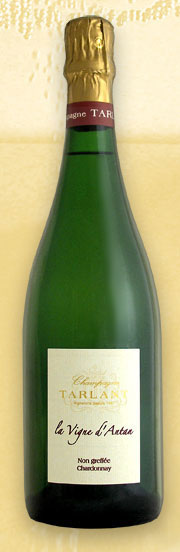
One of the many places Chardonnay plays a pivotal role is in the production of top-quality sparkling wine, particularly in Champagne. Most champagne is blended with Pinot Noir, Pinot Meunier and Chardonnay, however Blanc de Blancs Champagne is made exclusively from Chardonnay. A fabulous Blanc de Blancs Champagne to try is the biodynamically grown Champagne Tarlant ‘Cuvee La Vigne d’Antan’ from the Marne Valley in Champagne. This cuvee is produced from 100% Chardonnay from ungrafted vines averaging 43 years in age. Wine making techniques used here are oak barrel fermentation, lees stirring, no malo and was kept in barrel for 6 months. It is silky, creamy, elegant and very complex. Look for it to arrive to the WW stores in December.


Champagne Tarlant ‘Cuvee La Vigne d’Antan’ Retail $59.99 Warehouse $49.99


The one wine region where Chardonnay is not overtly oaked by its many top producers is Chablis. Chablis has a cool climate with its latitude being almost as far north as Champagne while possessing the same type of limestone soil. Chablis wines tend to have much higher acidity and are lighter in body than those made on the Côte de Beaune, which is further south. We have some traditionally styled Premier and Grand Cru versions from Droin. The Droin family has been in Chablis since at least 1547. Jean-Paul Droin took over the Estate in 1983. Fermentation is done in tank and barrel, battonage and malo conversion are practiced. The characters here are direct, mineral and citrus. These wines seem almost chalky in character with a nice zingy green edge. The Montee de Tonnere (mountain of thunder) is the only Premier Cru on the Grand Cru slope. Droin Chablis ‘Vaillons’ PC 2004, Retail $28.99 Warehouse $21.99

Droin Chablis ‘Montee de Tonnere’ PC 2004, Retail $34.99 Warehouse $24.99
Droin Chablis ‘Vaudesir’ GC 2004, Retail $54.99 Warehouse $44.99

A few other Chardonnays that originate from further south in Burgundy:
Aubert de Villaine Bourgogne Blanc ‘Clous’ 2004, Retail $24.99 Warehouse $19.99
Robert Denogent Macon Solutre 2004, Retail $24.99 Warehouse $19.99

Aubert de Villaine is the proprietor of the Domaine de la Romanee Conti of which he is a partner, but has his own domaine further south just south of Beaune. De Villaine is farmed organically and has white wines that show beautiful restraint and minerality. This is the opposite of the wines of Robert Denogent. These Chardonnays come from further south still in the Macon region of Burgundy. These are powerful old world Chardonnays that make one stand up and take notice. Denogent’s Pouilly Fuisses are as serious as you get from the Macon. These Pouillys remind me of Meursault Premier Crus. The Macon Solutre is made in the same style but happen to be around half the price of the Pouillys. Denogent’s whites have power, viscosity, are bursting with fruits but have a minerality on the finish that brings one back to the old world.

NEW WORLD STYLES: California with its many meso and macro climates has the ability to produce a myriad of Chardonnay styles and qualities. There are many favorites to experiment with in our stores. Here are a few suggestions:

Wild Horse Chardonnay is produced from grapes grown in California’s Central Coast. The grapes were hand-harvested, whole cluster pressed, initial fermentation took place in stainless steel tanks with fermentation to be finished in oak barrels. Malo was encouraged on the must from its cooler climates to reduce acids and enhance mouthfeel. Battonage was practiced every other week on the sur lie aging. The wine is supple and stylish, with pear, lemon, floral and nicely integrated toasty oak nuances.

Wild Horse Chardonnay 2004, Retail $15.99 Warehouse $10.99


Calamity Chardonnay from Carneros in the Napa Valley has been a real favorite at the WW. Whole bunches were hand-picked at night to preserve its freshness and delivered cool and healthy to the winery. Whole cluster pressing which is a gentle process of separating the juice from its skins, helps to avoid the bitter tannins that might otherwise be extracted. The free-run juice was drained to French oak barrels where it remained until assemblage and bottling some 10 months later. No yeasts are added to the new juice the complexity and individuality provided by the indigenous, or "wild" yeasts that convert the sugar to alcohol. The secondary fermentation (malo), converting the hard malic acid to the softer lactic, is completed by a cultured bacteria imported from Burgundy. To broaden the palate and mouth-feel of the wine battonage was employed, a technique that involves stirring the yeast lees in each barrel on a regular basis. By keeping the lees in suspension the wine's pure fruit character is guarded against oxidation and the wine seems to put on some weight, or "fatness," as well as being less astringent and sharp. The wine was fined but not filtered. This Chardonnay is intense with flavors of ripe pears, peaches and appley fruit with spicy oak flavors that offer a measure of depth and complexity. The finish is crisp, clean and refreshing and ends with a touch of spice.

Calamity ‘Napa’ Chardonnay 2004, Retail $21.99 Warehouse $14.99 (check out our buy three and get one deal here)

Rutherford Hill is known for its Merlot but also produces a serious Chardonnay. Rutherford Hill Chardonnay was made by using cultured yeasts that they feel lead to healthier fermentations which allow Sur lie aging until the first racking 9 months after harvest. Battonage, occurred twice a month for extra body and complexity. No malo with oak aging The Wine Spectator seemed to like it: A lean, focused style with spicy pear, green apple and lemon meringue touches, with a flinty edge, finishing with lively acidity, a burst of citrus flavors and a dash of toasty oak. Drink now through 2007 90 pts

Rutherford Hill ‘Napa Valley’ Chardonnay 2002, Retail $18.99 Warehouse $14.99
Other ‘New World’ Chardonnays:

Australian Chardonnay is often associated with overt tropical fruit characters. Australian winemakers are proficient at producing Chardonnay bargains as they were the first to use oak chips to infuse inexpensive wines with some oak flavors to go with Chardonnay’s tropical fruit character. Bulletin Place has always been one of our favorite cheap and cheerful Aussie Chardonnays. For a more serious, cool climate version of Chardonnay from Australia one must take a serious look at Cape Mentelle’s Margaret River Chardonnay from 2003. Cape Mentelle’s techniques are two-fold with one lot machine harvested, crushed, must-chilled and pressed to stainless steel tanks for cold settling prior to racking off gross lees to another tank for inoculation with prise de mousse yeast Two to three days later the fermenting juice was racked to French oak barrels, nearly half of which were new and the remainder one and two years old. Another lot was elevated as whole bunches into a tank press where the juice was gently pressed into a holding tank. The juice was racked into barrel the following day for fermentation by indigenous yeast. Occasional battonage is carried out during the time in barrel.

Cape Mentelle 2003, Smooth, silky and subtle. Rich in flavor, but it feels refined as the peppery, ripe apple, pear and grapefruit flavors play themselves out, picking up welcome mineral notes as the finish lingers. Drink now through 2011. only 475 cases imported 91 pts Wine Spectator

Cape Mentelle Chardonnay 2003, Retail $24.99 Warehouse $19.99

Bulletin Place Chardonnay 2004, Retail $7.99 Warehouse $4.99

Chardonnay had been the most planted grape in New Zealand, but has now been overtaken by Sauvignon Blanc. This is a smart move considering the unique character and popularity of NZ SB. This is no slight on NZ Chardonnay. The clean, green and fresh apple character often come through on NZ Chardonnay. For a nice unwooded version of Chardonnay, you may want to try the Villa Maria Private Bin?

Villa Maria Unoaked ‘Private Bin’ Chardonnay ‘Hawkes Bay’ 2005, Retail $13.99 Warehouse $9.99

Certainly there are Chardonnays from other countries that are worth trying. A few faves are Hamilton Russell and Neil Ellis from South Africa, Montes and Veramonte from Chile and Famiglia Bianchi from Argentina.

Tally ho! Off to tonight’s Beaujolais Nouveau tasting at the Wine Warehouse…………….

09 November, 2006

Evolving from Morley Safer to obese mice?

You may remember the startling report about 15 years ago by Morley Safer on ’60 Minutes’ regarding the ‘The French Paradox?’ The French were able to consume a high fat diet, yet had a much lower risk of coronary heart disease than a typical American would experience. The reason for this paradox was perceived to be the French population’s higher level of red wine consumption.

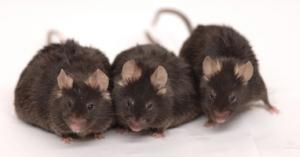
Recently, a study co-authored by researchers from Harvard University and the National Institutes of Health that found that resveratrol, a substance found in red wine, extended the life and improved the health of middle-aged, overweight mice. Why should we care about resveratrol or obese mice? Resveratrol is found in red wines and also produced by a variety of plants (including vines) when put under stress.

Resveratrol appears to be associated with anti-aging and preventing the effects of diseases of aging, such as diabetes, cancer and dementia. Using a high calorie diet on mice, researchers found that among the overweight mice, giving a control group resveratrol reduced the negative impact of being obese. When the mice were 60 weeks old, those mice receiving resveratrol showed a three- to four-month increase in survival, compared to mice not receiving the compound. By 114 weeks, when the mice reached old age, more than half of the animals on a high-fat diet alone had died, compared to less than one-third of those receiving resveratrol. "Resveratrol extends the lifespan of every species we have fed it to," said lead researcher David Sinclair, an associate professor of pathology at Harvard Medical School. "We are now showing that this is also possible for mice on a high-fat diet," he added. Resveratrol is said to stabilize blood sugar and other effects of obesity. Astoundingly, the organs of the fat mice that got the wine extract looked normal when they shouldn’t have, said study lead author Dr. David Sinclair of Harvard Medical School. And Sinclair said other preliminary work still being done in the lab shows the wine ingredient has promise in lengthening the life span of normal-sized mice, too. The resveratrol-treated 55 obese mice on a high-calorie diet (one scientist called it a “McDonald’s diet”) are not only about as healthy as normal mice, they are as agile and active on exercise equipment as their lean cousins, showing what can be considered a normal quality of life, higher than usual for obese mice, said study co-author Rafael de Cabo of the National Institute on Aging.

Heart Disease
Over the past several decades, many studies have been published in scientific journals about how drinking alcohol may be associated with reduced mortality due to heart disease in some populations. Some researchers have suggested that the benefit may be due to wine, especially red wine. Others are examining the potential benefits of components in red wine such as flavonoids and other antioxidants in reducing heart disease risk. Some of these components may be found in other foods such as grapes or red grape juice. The linkage reported in many of these studies may be due to other lifestyle factors rather than alcohol. Such factors may include increased physical activity, and a diet high in fruits and vegetables and lower in saturated fats.


According to the relatively conservative American Heart Association, research is being done to find out what the apparent benefits of drinking wine or alcohol in some populations may be due to, including the role of antioxidants, an increase in HDL ("good") cholesterol or anti-clotting properties. “Clinical trials of other antioxidants such as vitamin E have not shown any cardio-protective effect. Also, even if they were protective, antioxidants can be obtained from many fruits and vegetables, including red grape juice. The best-known effect of alcohol is a small increase in HDL cholesterol. However, regular physical activity is another effective way to raise HDL cholesterol, and niacin can be prescribed to raise it to a greater degree. Alcohol or some substances such as resveratrol found in alcoholic beverages may prevent platelets in the blood from sticking together.” On my last physical, my HDL level was 92 with the LDL being 88 (total cholesterol of 180). My doctor said that this was the first time that he had seen a higher HDL than LDL (bad cholesterol) where LDL is typically around 3x HDL. Another doctor friend of mine who previously did research in labs said that red wine is partially to receive the credit here, but the fact that I regularly exercise contributed as well.

Alzheimer's
According to new animal research, drinking red wine may help prevent Alzheimer's disease. In a research study, mice that were given cabernet sauvignon experienced significantly reduced Alzheimer's disease-type brain deterioration of memory function compared to mice that received ethanol or water.

The researchers, from Mount Sinai School of Medicine in New York, found that cabernet sauvignon's benefits were due to its ability to prevent the generation of proteins that cause plaque buildup in the brain, which is the main characteristic of Alzheimer's disease. "This study supports epidemiological evidence indicating that moderate wine consumption, defined as one drink per day for women and two for men, may help reduce the relative risk for AD clinical dementia," said researchers Dr. Giulio Maria Pasinetti and Dr. Jun Wang.

Diabetes
For humans, high calorie diets can increase glucose and insulin levels leading to diabetes, cardiovascular disease, and non-alcoholic fatty liver disease. In the Harvard study, researchers found biomarkers that might predict diabetes, including increased levels of insulin, glucose and insulin-like growth factor-1 in the non-resveratrol fed mice. For example, a standard diabetes glucose test on the resveratrol fed group found considerably higher insulin sensitivity, meaning the resveratrol group had a lower disposition toward diabetes than the non-resveratrol fed group. Lower insulin levels predicted increased lifespans in the mice. This is a tough prevention/cure dilemma as many doctors suggest their diabetic patients to stay away from wine due to wine’s natural grape sugars. It is best to consult your physician with any questions here.

Heart and Liver
In the Harvard study, researchers found that the livers of mice at 18 months of age on the non-resveratrol diet were greatly increased in size and weight. Liver tissue studies of these mice showed a loss of cellular integrity, and a build-up of lipids, which is common to high fat diets. In contrast, the resveratrol group had normal, healthy livers.

Immune System
Unlike many other alcoholic beverages, red wine does not suppress the immune system, according to preliminary studies at the University of Florida. While red wine has been reported to aid in the prevention of coronary heart disease and some cancers, no one had studied whether its alcohol content might offset any benefits, said food science and human nutrition researcher Susan Percival.
Percival, who specializes in nutrition and immunity, conducted a study to find out if red wine affects the immune system. Her research shows that the circulating white blood cells that fight infection are neither helped nor hurt by red wine. The study was designed to replicate moderate alcohol consumption for people, so the mice were given the equivalent of two or three glasses, or servings, of wine or alcohol per day.

Moderation
It is important to stress that this blog is neither condoning nor encouraging the consumption of alcohol. Over consumption of ethanol (alcohol) has shown itself to be more harmful than beneficial as will be explained below by the “J shaped curve.” Please note though that other benefits of moderate consumption that have been researched but not covered here are ethanol’s role in the prevention against strokes and in increased bone density in the elderly.


J Shaped Curve
OK, take a large population of people with the knowledge of their average daily alcohol consumption, and their mortality. Plot the mortality on the upright axis, and on the horizontal axis take alcohol average daily consumption. Now fit a curve to the data points. If you have a large enough population, you'll see a nice curve that has the shape of a J. That is, those who drink nothing, have what is estimated to be a baseline mortality, or the risk of death used as a reference point. As daily consumption increases, that risk of death drops slightly. Then, as alcohol consumption increases, the risk of death increases until it reaches the baseline (these people have the same risk of death as those who drink nothing at all), and as drinking gets heavier, the risk of death continues to increase steadily. This is called the J-shaped curve, and is a remarkably consistent finding from many large studies. It is the solid body of data that has led to the conclusion that moderate drinking is indeed beneficial to health. Yet, over-consumption will reduce the benefits and actually have negative consequences.

Resveratrol in Wine
When resveratrol data first began coming out around ten years ago, many presumed it would be the red grapes with the thickest skins that would contain the highest concentrations of resveratrol since resveratrol is found in the skins. Turns out that the thicker skinned varieties such as Cabernet Sauvignon, produce less resveratrol than thin skinned varieties such as Pinot Noir, as they have less stress protecting themselves against moulds and vineyard pests. ‘As if’ Pinot Noir needs another reason for us to drink it? We at WW have a terrific selection of Pinot Noirs in that are worth trying from Burgundy in France and other areas around the world. Ask your store manager for their favorites. You may want to try:


Burgundy
Colin Bourgogne Rouge 2004, Retail $18.99 Warehouse $15.99
Colin Maranges ‘Fussieres’ 2004, Retail $34.99 Warehouse $26.99
Bertheau Chambolle Musigny ‘Premier Cru’ 2004, Retail $69.99 Warehouse $49.99
Boillot Gevrey Chambertin ‘Cherbaudes’ 2004, Retail $59.99 Warehouse $51.99
California
Avila Pinot Noir 2005, Retail $14.99 Warehouse $10.99
Lily Pinot Noir 2005, Retail $21.99 Warehouse $17.99
Laetitia Pinot Noir 2005, Retail $24.99 Warehouse $19.99
New Zealand (coming soon) please look for these as well as our current in-store selections
Villa Maria ‘Cellar Selection’ Marlborough 2005
Vidal ‘Marlborough’ 2004
Rockburn ‘Central Otago’ 2003 which is a 90 pointer in the Wine Spectator

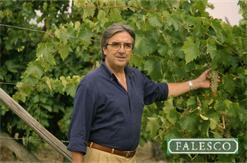
Winery Feature: Falesco from Umbria in Italy


Falesco was established in 1979 with the principal aim of rediscovering and enhancing the value of Lazio’s traditional varietals. The winery is the brainchild of Italian wine-making icon Riccardo Cotarella. Falesco is located 50 miles from Rome and its vineyards are situated in the most prestigious areas around the Umbrian-Lazian border.

Est Est Est is straw yellow in color, fresh and structured because of a good level of acidity. Displays floral and fruity notes. Refreshing when served as an aperitif or with appetizers and fish dishes. Produced from 60% Trebbiano, 30% Malvasia, 10% Roscetto
Falesco Est Est Est 2005, Retail $9.99 Warehouse $6.99

Ferentano is produced from 100% Roscetto grown in estate vineyards in Montefiascone. Wine Advocate 90 points."It begins slowly aromatically, but builds intensity in the mouth revealing a tremendous, full-bodied, layered, honey character reminiscent of a southern Rhone blend of Roussanne, Viognier, and Marsanne. It could be served with meat dishes given its full body and intensity. This noteworthy value represents a remarkable achievement for this estate."
Falesco Ferentano 2004, Retail $24.99 Warehouse $19.99

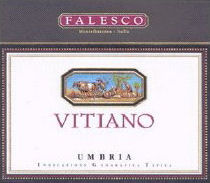
Vitiano Bianco was born from one of the many experimental vineyards of the University of Viterbo. The grapes Vermentino, Viognier and Verdicchio all fair exceptionally well in the sediment and calcareous clay soils around the Marciliano estate. This white wine is nicely balanced, full and fresh while displaying characters of fresh grass, lime and ripe pears.
Falesco Vitiano Bianco 2005, Retail $10.99 Warehouse $7.99


Vitiano Rosso is blend of equal parts Merlot, Cabernet Sauvignon and Sangiovese grapes grown in the region of Umbria. This is a young red wine with explosive, luscious aromas. Always a favorite at the Wine Warehouse. Wine Advocate ’89 points.’ “A rich bouquet of black cherry jam, licorice, tobacco leaf, and spice box, surprising density, and medium body. As I have written before, it’s almost too good to believe at this price.”
Falesco Vitiano Rosso 2005, Retail $10.99 Warehouse $7.99

Montiano is produced from 100% Merlot grown in the Montiano vineyard in Lazio. Montiano has a wonderful deep, ruby red color and a wide range of aromas such as vanilla and small red fruits with layers of jam and sweet spices. It is full-bodied, round and soft on the palate with an elegant and lingering finish.
Falesco Montiano, Retail $49.99 Warehouse $39.99
Falesco Montiano 375ml, Retail$24.99 Warehouse $19.99

The Merlot Pesano is produced from 100% Merlot grown in varied estate vineyards in Umbria. This Merlot is unfiltered and exhibits a deep ruby-red color and rich, spicy aromas. Wine Advocate 90 points. "An extremely intense, amazing bargain, the Merlot Pesano (100% Merlot aged 5-6 months in barrel) exhibits a deep ruby/purple hue, and fleshy, concentrated, black cherry, cassis, smoke, herb, and mocha aromas and flavors. This medium-bodied, concentrated, unbelievably low-priced red is too good to be true."
Falesco Merlot Pesano, Retail $17.99 Warehouse $14.99

Marciliano is produced from 70% Cabernet Sauvignon and 30% Cabernet Franc grown in estate vineyards in Umbria. Marciliano has a profound dark purple color and exhibits complex aromas of tobacco and slate. This wine is a great representation of Cabernet when all of nature's forces are working together. This is Umbria’s version of a ‘Super Tuscan.’
Falesco Marciliano 2003, Retail $59.99 Warehouse $49.99

Speaking of healthy, please don’t forget our fantastic selection of Estate Grown olive oils from Italy including:
Falesco Olive Oil 500ml, Retail $18.99 Warehouse $14.99
Falesco Olive Oil Marciliano 500ml, Retail $29.99 Warehouse $19.99

Sante from the blogsphere…………………

02 November, 2006

G’Day Skippy, care for an Aussie wine?

Taltarni
One of the first premium Australian wines that I can remember seeing in the US was Taltarni Vineyards. Established in 1969, Taltarni is a founding winery of Victoria’s Pyrenees wine region which is near Melbourne. The picturesque 700ha property, released its first wine in 1977. Today Taltarni has 132ha of vines. The Pyrenees wine district is one of life’s hidden treasures – the rolling hills, sweeping bluffs and gum trees create a beautiful landscape. In local aboriginal dialect Taltarni means ‘red earth', describing the rich, red soil of the region. Taltarni Vineyards is affiliated with Clos Du Val Winery in the Napa Valley and Bernard Portet, Clos du Val’s winemaker and the former winemaker at Ch Lafite Rothschild.

Taltarni is one of the pioneers of Australian Sauvignon Blanc - its cool climate and vineyard elevation ideally suited to creating a wine with an outstanding combination of tropical fruit, gooseberry and lime sorbet characters and a refreshingly crisp finish. This wine is crafted from fruit sourced from vineyards in Victoria’s Pyrenees and Tasmanian wine regions. Inclusion of Tasmanian fruit imparts an explosion of cool climate aromas and lifted gooseberry, citrus and grapefruit flavors. The 2005 vintage is bursting with a mix of fresh fruit salad aromas of passionfruit, grapefruit and limes.

Taltarni Sauvignon Blanc 2005, Retail $14.99 Warehouse $9.99

Taché is a French word meaning ‘stained’ and refers to the rare winemaking method used since 1985 by Taltarni to create this fine rosé-colored sparkling wine. Its amazing delicate salmon pink color is achieved by adding a dash of red wine liqueur to the finished tirage wine at disgorgement. Disgorgement is when the yeast lees and sediment are popped out of the bottle where the wine will then see its final blending with the liquer de triage.Taltarni’s Brut Taché 2004 is a blend of three classic sparkling wine varietals Chardonnay, Pinot Noir and Pinot Meunier sourced from our cool climate vineyards in Victorian and Tasmanian wine regions. Each bottle of Taltarni Brut Taché is fermented in its original bottle and matured on yeast lees for 18 months followed by 3 months on cork prior to release according to traditional methods to create a complex sparkling wine. This wine has an salmon-pink color, on the nose an assortment of fresh fruit, rose petals, apricots and white peach aromas complemented by complex yeasty characters.

Taltarni Brut Tache, Retail $19.99 Warehouse $17.99

Taltarni’s Pyrenees Shiraz is grown from cuttings sourced from 100 year old vines planted at Seppelt’s Great Western Vineyard in 1864. Shiraz is a variety that thrives in the Pyrenees producing a deep magenta colored, complex, rich and peppery style with intense spicy, berry aromas and well-balanced and ripe tannins. The 2002 vintage in the Pyrenees produced exceptional red wines. An unusually cool summer, minimal rainfall and a gradual, extended ripening period resulted in optimal natural acidity, sugar and flavor development in all varieties. Yields were down by about 50% and with fewer more concentrated berries produced an array of intense, concentrated fruit flavors. This wine is an 100% Estate Grown Shiraz – fruit is selected in individual parcels to create a luscious wine with the perfect assortment of rich berry flavors and spice. Aged for 16 months in French oak barriques creates a complex wine with fine tannin structure.

This Shiraz sports aromas of sweet berries combine with hints of violets and mint followed by a full palate of rich dark spicy fruit leaving trails of dark chocolate, licorice and cherries. The wine was fermented in traditional open-top fermenters with heading board system. The pressed wine was aged in a combination of new French and American oak complemented with an even mix of 1, 2, 3 and 4 year old oak.

Taltarni ‘Pyrenees’ Shiraz 2002, Retail $17.99 Warehouse $14.99


One of our favorite new wineries is Kangarilla Road. Winemaker Kevin O’Brien recently did a tour of Florida and conducted tastings in a few of our Wine Warehouse stores. Pictured above from our Atlantic Beach store are store manager Mark Graeser, Kevin and AB assistant manager Sushi. Named after the road the vineyard resides on, Kangarilla Road is 22 miles south of Adelaide and nestled between the Gulf of St. Vincent and the South Mount Lofty ranges. The Cabernet Sauvignon is sourced from four vineyards in the McLaren Vale district. The major percentage is from Kangarilla Road’s McLaren Flat vineyards together with that of its immediate neighbor. These vineyards located at the northern part of the foothills ripen later than many of the other sub-regions resulting in "cooler climate" aromatic dark fruit driven wines with intense mid to back palate presence and an abundance of soft velvety tannins. The balance of the blend is sourced from a vineyard in the Seaview and Aldinga regions of McLaren Vale. Both of these vineyards are located in highly stressed sites where the influence of strong wind and sandy soils give rise to intense aromas and flavors.

Kangarilla Road Cabernet Sauvignon, Retail $21.99 Warehouse $18.99

Kangarilla produces an amazingly fresh and delicious Viognier. This light straw colored wine has green hues and lively aromas of ginger, marmalade citrus and hints of zesty oiliness that are characteristic of Viognier. Mouth filling, sweet jammy and zesty citrus flavors coat the palate with integrated oak, and fresh acidity. Seventy percent of this wine was fermented in new French oak Barrels.

This wine is blended from equal proportions of Viognier from vineyards in three distinctive areas within McLaren Vale. The Viognier from Kangarilla Road’s McLaren Flat vineyards located at the northern section of the foothills ripen later than other sub-regions resulting in "cooler climate" elegant light conserve characters that marry well with barrel fermentation.

From the Wine Advocate, a delicate, nuanced style of Viognier, the 2005 makes a mockery of many New World, tooty fruity, bubble gum type wines. Exceptional freshness, a mineral-like character, medium body, and plenty of peach, apricot, and citrus oil notes are present in this impressively endowed effort. It should drink nicely for several years. 90 points
Kangarilla Road Viognier, Retail $18.99 Warehouse $15.99

Who says Zinfandel is only grown in California? Kangarilla produces a blockbuster Zinfandel from the McLaren Vale that is crimson with red hues, ripe, dark berry fruits with plum and hints of dark cherry integrated with nuances of oak and spice. Full, long flavored with crushed red and black fruits and a soft yet flavorful finish. Sourced from Kangarilla Road ’s estate vineyard in McLaren Vale. This vineyard includes 30-year-old non-irrigated vines growing in low vigor red/brown loam creating a useful stressed environment that Zinfandel loves so much.
This Zin is fermented by using a submerged cap in open-top fermenters. 25% of this wine sees new French oaking, with the balance in 3 and 4 year American oak barrels. The 2003 vintage was one of extremes. Drought conditions were the most severe since 1985 and the strong winds during flowering and fruit set affected cluster numbers and the formation of berries. The resultant wines are intense in color and rich in aroma and flavor. 2003 was a winemaker’s vintage and Kevin did a superb job.

From the latest Wine Advocate: One of my favorite McLaren Vale wineries, Kangarilla Road offers very realistic prices for the quality of their wines. Substantial and rich, but still elegantly styled is the fig, fruit cake, black cherry, and pepper-scented 2003 Zinfandel McLaren Vale. Heady, well-made, and pure, it should drink well for 2-3 years. 90 points

Kangarilla Road ‘McLaren Vale’ Zinfandel, Retail $32.99 Warehouse $25.99

Kangarilla Road Shiraz is produced primarily from Kangarilla Road’s McLaren Flat vineyards located at the northern part of the foothills that ripen later than other sub-regions, resulting in "cooler climate" spicy aromatic dark berry (cherry) driven wines with intense mid to back palate impression and soft velvety tannins.

The second component is sourced from the Blewitt Springs and Seaview areas where soils range from mostly deep sands to red earth on limestone giving the wine spicy bold dark plum characters very important as a nuance to the 2003 wine. A small percentage of the blend is from the Hackham sub-region. Here the Shiraz ripens early, yields are very low and the wine is intense and almost Vintage Port like in style. The small percentage (around 10%) of the blend contributes enormously to the overall complexity of the wine. The final small percentage of the blend is from a vineyard in the Sellicks sub-region, which is very close to the sea. Shiraz ripens early here also with very low yields that have herbaceous characters with firm Cabernet like tannins.

Opulent aromas of dark berries, fruit cake with brambles, raisins and savory spices. Powerful, full-bodied style with loads of ripe, dried fruit flavors, spicy acidity and a long integrated finish. Drink over the next few years.

Check out the latest Parker press! The stunning 2004 Shiraz boasts deep mocha, blackberry, cherry, and white chocolate notes interspersed with hints of new oak (both French and American wood are used), pepper, smoke, and coffee. This rich, layered, tasty Aussie red can be drunk now and over the next 7-8 years. 92 points

Kangarilla Road Shiraz, Retail $21.99 Warehouse $18.99

Cape Barren
The Cape Barren name comes from the Cape Barren goose, which is native to the coastal areas of Southern Australia. Cape Barren geese can be seen feeding in and around the Blewitt Springs vineyard.
Cape Barren’s Blewitt Springs vineyard, previously a source of Shiraz for several Australian icon wines, was chosen to provide the grapes for Cape Barren Old Vine Shiraz. Blewitt Springs is a small vineyard of approximately 10 acres that is cooler and has a longer ripening period than the nearby vineyards at Willunga and McLaren Flat. The low yielding vines at The Springs are over 70 years old and at best they produce two tons of fruit per acre. The unique terroir of this vineyard allows for the creation of an elegant, single vineyard Shiraz that possesses profound depth of flavor.

The intense 2003 Shiraz has ripe berry, blackcurrant fruits and fragrant spices on the nose. It is richly textured and flavored with anise and clove accents backing dark berry fruits. Maturation in 300 liter barrels provided a hint of integrated vanilla and oak with softly textured tannins and a long length of persistence.

From Robert Parker: The 2003 Shiraz Old Vine is a big, full-bodied effort exhibiting notes of melted chocolate, chewy blackberry and cassis fruit, and toasty oak. With plenty of glycerin, alcohol, and rich fruit in its deep, formidably endowed, velvety textured personality, it should be drunk over the next 5-6 years. 93 points

Cape Barren ‘Old Vines’ McLaren Vale Shiraz 2003, Retail $31.99 Warehouse $24.99

Jacob’s Creek
What’s an Aussie wine blog without a value offering? Jacob’s Creek is the world’s most popular Australian wine by selling over 7 million cases worldwide. Jacobs Creek is owned by drinks giant Pernod Ricard. Pernod Ricard is one of the top three wine and spirits companies in the world. Pernod Ricard has emerged to be more than just an anise liqueur. We have three of Jacob’s Creek’s popular wines at very popular prices.


Jacob’s Creek Shiraz 2004 possesses ripe blackberry mid-palate with hints of spice. Rich and full-flavored with velvet tannin structure and subtle toasty oak notes.
1.5 liter Retail $14.99 Warehouse $9.95

Jacob’s Creek Cabernet Sauvignon 2004 has a nose displaying intense varietal aromas of ripe plums, cassis, blackcurrant with hints of spice and subtle oak influence.
1.5 liter Retail $14.99 Warehouse $9.95

Jacob’s Creek Chardonnay 2005 is fragrant and fresh. Nectarine, honeydew melon and citrus blossom aromas combine with a subtle spice and toasty oak characters.
1.5 liter Retail $14.99 Warehouse $9.95

Campbells
On to the stickies! We have a pair of ultra-expressive dessert style wines from Campbells. The Campbells are a fourth generation Rutherglen winemaking family dedicated to continuing the Rutherglen tradition that began in 1870 of producing deep and complex wines from the region. I once sat a wine exam where in previous years the examiners were know to stick in a Rutherglen Liquer Muscat into the blind tasting. I had never tasted a Liquer Muscat as they were not that easy to find in the US at the time. Sure enough, there was one on the exam and I nailed it. Why? It couldn't have been anything else. Try this wine and see, there are musky, deep berry aromas, bright amber, golden hues with copper hints belong to this wine. The palate is luscious and mouth-filling with raisin fruit followed by a long finish. There is nothing quite like it anywhere. The wine is blended to maintain a consistent house style when combined with wines from previous vintages – some are more than 30 years old.

The grapes for this Muscat and the following Tokay were entirely sourced from Campbells ’ family owned and managed vineyards located in Rutherglen in North East Victoria, Australia. Rutherglen’s cold, frosty winters with good rains, warm-to-hot, dry summers and long, mild, dry autumns allow for steady and full grape maturation.

More notes from Parker: The unctuous, light amber-hued non-vintage Muscat exhibits a sweet, caramelized, raisiny character with notes of plums, fruitcakes, and marmalade. It is gloriously sweet yet relatively light on its feet. 93 points

Campbells Rutherglen Liquer Muscat 375ml, Retail $18.99 Warehouse $15.99

The Campbells Tokay wine is a style and not a grape but is actually made from the Muscadelle grape and is blended with wines from previous vintages to produce a consistent style. This wine contains portions from a number of different vintages as old as 30 years. Made from a white grape, this wine is much lighter in color than a port or muscat of equivalent age.

Each vintage of the Tokay grapes are left on the vine (20- to 25- year-old vine age) to ripen fully until raisined and brimming with natural sugar. The wine is then blended with wines from previous vintages to produce a consistent style. Deep, brilliant, burnished gold with a nose displaying toffee, honey and cold tea characters. The toffee and tealeaf characters are predominate in the front palate with bracing hints of spirit and mellowed oak on the finish.

Another Parker note: The non-vintage Tokay reveals hints of Chinese black tea interwoven with caramel, buttered nuts, prunes, and toffee. These wines rarely improve in the bottle, but even after 5-10 years, they do not reveal any signs of falling apart. 91 points

Campbell’s Rutherglen Tokay 375ml, Retail $18.99 Warehouse $14.99

Cheers mates!