Who says that wine tasting is not a sport?
 Flashing back to late January, 1993………….to the Drake Hotel in NYC. The setting was a seminar for aspiring Master of Wine candidates. In the ‘candidate’ crowd were a number of American wine notables including Larry Stone, Andrea Immer, Mary Ewing-Mulligan and Doug Frost. The drill encompassed having 12 wines set in front of you in individual glasses. There was nothing other than the questions being asked about the wine as a clue to what the wines might be. Candidates were randomly asked to ‘read their notes’ about a specific wine. After several candidates took their stab as to how the wine was made, what its characteristics were, and what grape/grapes might make up this wine, what appellation and vintage the wine was while giving reasons for the answers; Anthony Foster, M.W. would then proclaim ‘Right! I’ll read MY notes.’ Of course as Anthony knew what the wine was, he had a serious advantage. One would always hope that Anthony would choose them to ‘read their notes’ when there was a confidence level that their tasting notes were strong and accurate on that particular wine. There was a specific red wine that I was hoping that Anthony would spare me having to ‘read my notes.’ This wine had a brick-like red color, had a green-herbal-vegetal like nose, and a rather low level of alcohol and extract. I figured it must come from a cool climate, but other than that I was stumped. It seemed that the rest of the crowd was stumped as well judging from their ‘notes.’ Then there was this one guy at the back of the room who perfectly described the wine, gave a reasoned analysis why the cool climate that this wine came from was the Loire Valley and nailed the variety as Cabernet Franc. The wine was from Saumur Champigny and he was confident that it came from either there or Chinon. Anthony acknowledged that these were the ideal tasting notes. Several of us went up to the guy after the session and asked him how he was able to ‘nail’ that wine when nobody else came close. He said ‘it was easy because the wine smelled and tasted of beets, which is a marker for cool climate reds and in particular Cabernet Franc from the Loire.’ It turns out that this guy had a good bit of experience with Loire Valley reds as he was Kermit Lynch’s national sales manager. The guy was Fran Kysela.
You may be asking yourselves what any of the above has to do with beets? It is all about chaptalization or enrichment. The process is named after Jean-Antoine Chaptal in France during the 1800’s. The process is used to increase the final alcoholic strength of a wine by adding sugar to the grape juice or must before or during fermentation. This would be the opposite of last week’s blog which discussed the problem with grapes that are potentially too ripe.
 Let me hit you with some knowledge: Traditionally used to compensate or underripeness in cool winegrowing regions, ‘enrichment’ encompasses the addition of sugar, grape must, or concentrated grape must to a wine. Enrichment is the counterpoint to acidification which is the norm in hot regions. Sucrose is the usual enrichment material used. In northern Europe this has normally been refined sugar beet, or occasionally cane sugar.
So why doesn’t my Saumur taste like beets? It is because we are working with high quality producers from the region. They are farming their vines with lower than average yields, have their vines planted in optimal terroirs and have had good luck with the weather being warmer than usual. With these factors, the Cabernet Franc ripens properly and therefore no enrichment is needed. Be on the lookout for Domaine des Roches Neuves. You’ll be glad that you did.
At the Wine Warehouse, we look to separate ourselves from the pack by aligning with producers who are on the cutting edge. We found a relatively new importer in Jon-David Headrick whose own importing business started in 2003 and who has a portfolio of small wineries from Northern France focusing on the chalk line from Champagne that runs through the Loire Valley. His portfolio currently includes 15 properties from the Loire and 5 growers from Champagne.
The properties with which Jon-David works are consumed with making wines which are true to where they come from, true to the earth, and true to the winemaker’s obsession with quality. The wines are harvested by hand and the grapes are grown according to either organic or biodynamic practices. Many of the properties are certified organic or biodynamic. All are leaders in their appellations and harvest lower yields than their neighbors to ensure a premium product.
At the Wine Warehouse, we look to separate ourselves from the pack by aligning with producers who are on the cutting edge. We found a relatively new importer in Jon-David Headrick whose own importing business started in 2003 and who has a portfolio of small wineries from Northern France focusing on the chalk line from Champagne that runs through the Loire Valley. His portfolio currently includes 15 properties from the Loire and 5 growers from Champagne.
The properties with which Jon-David works are consumed with making wines which are true to where they come from, true to the earth, and true to the winemaker’s obsession with quality. The wines are harvested by hand and the grapes are grown according to either organic or biodynamic practices. Many of the properties are certified organic or biodynamic. All are leaders in their appellations and harvest lower yields than their neighbors to ensure a premium product.
Domaine des Roches Neuves (Saumur, Saumur-Champigny) One of the  brightest stars in French winemaking today, Thierry Germain is making the wine world re-think how it has perceived Cabernet Franc from the Loire. His tiny property is certified biodynamic and his yields are a miniscule 15-30 hl/ha, almost a full 40 hl/ha under his neighbors and hence, the lack of the need for beets. The vines are vibrant and wild, with tiny berries filled with concentrated fruit and minerality. His white wine ‘Insolite’ is an intensely floral and mineral offering produced entirely from Chenin Blanc.

Domaine des Roches Neuves Saumur Champigny Rouge 2005, Retail $29.99 Warehouse $24.99
Domaine des Roches Neuves Saumur ‘Insolite’ 2005, Retail $29.99 Warehouse $24.99
 brightest stars in French winemaking today, Thierry Germain is making the wine world re-think how it has perceived Cabernet Franc from the Loire. His tiny property is certified biodynamic and his yields are a miniscule 15-30 hl/ha, almost a full 40 hl/ha under his neighbors and hence, the lack of the need for beets. The vines are vibrant and wild, with tiny berries filled with concentrated fruit and minerality. His white wine ‘Insolite’ is an intensely floral and mineral offering produced entirely from Chenin Blanc.
Domaine des Roches Neuves Saumur Champigny Rouge 2005, Retail $29.99 Warehouse $24.99
Domaine des Roches Neuves Saumur ‘Insolite’ 2005, Retail $29.99 Warehouse $24.99
 Domaine Saint Nicolas (Fiefs Vendeens) With vineyards just a stone's throw from the Atlantic ocean, the Fiefs Vendeens is the southernmost of the Loire’s wine growing regions, located about an hour south of Nantes (Muscadet). Domaine St. Nicolas, run by the dynamic Thierry Michon, is one of the few certified biodynamic vineyards in the Loire, and is planted to Chenin, Pinot Noir, Gamay, and other varietals planted mostly on pink slate and quartz. These wines are pure examples of terroir, often expressing the salinity of the nearby sea and the minerality of the slate on which they are planted.
Domaine Saint Nicolas ‘Gammes en May’ 2005, Retail $13.99 Warehouse $9.99
Domaine du Viking (Vouvray) Lionel Gauthier, known to his friends and foes as “the
Viking” is as much a “character” as he is a winemaker with his shock of “Viking” blond hair and big build. His winemaking is all about purity and simplicity, with no manipulation. Aged in older chestnut barrels, this Chenin Blanc is almost always created in a style that he refers to as “tendre” (tender), basically a demi-sec with mouthwatering acidity. His older vintages are prime examples of how Chenin Blanc ages.

Off-dry at first impression, with green almond, fig and pear flavors, this gives way to a more cut on the back end, with floral and candied ginger notes. Long, minerally finish. An absolute steal at this price. Drink now through 2020. 2,000 cases made. 92pts Wine Spectator.
Domaine du Viking Vouvray 2002, Retail $ 21.99 Warehouse $16.99
Like its 1990 sibling, this has candied citrus, pineapple and melon flavors that are mature and defined. But there's extra richness here, with more obvious sweetness and a more open-knit finish. Drink now through 2010. 2,000 cases made. 92pts Wine Spectator
Domaine du Viking Vouvray 1989, Retail $29.99 Warehouse $21.99
 Domaine des Huards (Cheverny, Cour-Cheverny) The property is certified biodynamic and uses only indigenous yeasts. Huards Cheverny Rouge is a blend of Pinot Noir and Gamay. This is a very fine and stylish red. Worth seeking out for you Pinot Noir lovers.
Domaine de Huards Cheverny Rouge 2005, Retail $18.99 Warehouse $14.99

Off-dry at first impression, with green almond, fig and pear flavors, this gives way to a more cut on the back end, with floral and candied ginger notes. Long, minerally finish. An absolute steal at this price. Drink now through 2020. 2,000 cases made. 92pts Wine Spectator.
Domaine du Viking Vouvray 2002, Retail $ 21.99 Warehouse $16.99
Like its 1990 sibling, this has candied citrus, pineapple and melon flavors that are mature and defined. But there's extra richness here, with more obvious sweetness and a more open-knit finish. Drink now through 2010. 2,000 cases made. 92pts Wine Spectator
Domaine du Viking Vouvray 1989, Retail $29.99 Warehouse $21.99
 Domaine des Huards (Cheverny, Cour-Cheverny) The property is certified biodynamic and uses only indigenous yeasts. Huards Cheverny Rouge is a blend of Pinot Noir and Gamay. This is a very fine and stylish red. Worth seeking out for you Pinot Noir lovers.
Domaine de Huards Cheverny Rouge 2005, Retail $18.99 Warehouse $14.99
 Domaine Vincent Ogereau The picture above shows Vincent Ogereau on the left, with Jon-David on the right. Just south of the Loire river from Savennieres, the area of the Anjou where Vincent Ogereau produces Chenin Blanc is composed of the same dense slate that Savennieres is planted on, giving the wine of this tiny part of the Anjou the same density and minerality. There may be some of the Anjou Blanc left in our shops. Our current arrival is the 03 Anjou rouge produced from Cabernet Franc grapes. This is organically farmed, undergoes a long maceration and spends 12 months in barrel.
Domaine Ogereau Anjou Villages Rouge 2003, Retail $ 18.99 Warehouse $15.99
Domaine Vacheron, Sancerre. Each step over the Domaine Vacheron’s 100% silex soil sounds like the intense crunching of oyster shells. What's underfoot is the power that makes “Les Romains” fresh, with great minerality, and thus long-lived. It's also why Domaine Vacheron today is 100% organic/biodynamic—what you taste in every glass is exactly what nature intended.
The cousins Vacheron, Jean-Dominique and Jean-Laurent harvest with yields consistently lower than the average Sancerre harvest. This is just one reason why “Les Romains” is so outstanding—not only does it represent one of the finest terroirs in Sancerre, but its yields (30 ha/hl) are miniscule. Grapes are pressed whole, then aged in large foudres for more oxygen contact and thus more complexity than would be achieved in a stainless steel vessel. This wine has vibrancy and verve. The 2005 Sancerre “Les Romains” is described by The Wine Spectator as a young, bony white, with a flinty spine holding the chalk, chive flower and grass flavors together. Drink now through 2007. 89pts Wine Spectator
Domaine Vacheron Sancerre 2005, Retail $24.99 Warehouse $19.99
In Champagne, JD works only with growers and not with negociants. This approach allows for more place specificity. A few blogs ago I had mentioned that the large Champagne houses end up spending 95% of their profits on promotions and marketing. The following Champagne houses are small and do not have to spend like this. That is why these wines are such good values for the quality that they bring.
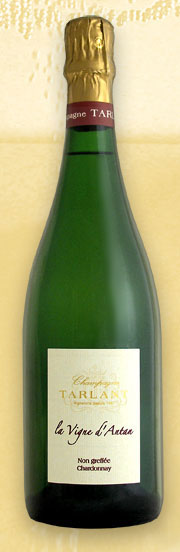
 Champagne Tarlant (Marne) Benoit Tarlant believes that Champagne doesn’t need an abundance of sugar or liqueur added to taste good, and as such, is one of the new wave of young growers in Champagne to bottle with zero dosage, called “Brut Zero” in French. This approach means that the raw material must be pristine as there is nothing added that can mask it. Located just west of Epernay on the right bank of the Marne, Benoit farms his steep hillsides organically, and harvests and vinifies by parcel, which is a rarity in Champagne.
Champagne Tarlant Brut Zero, Retail $39.99 Warehouse $29.99
Champagne Tarlant La Vigne d’Antan, Retail $59.99 Warehouse $49.99
 Champagne Franck Pascal (Marne) One of the leaders of the new revolution in grower Champagne, Franck Pascal owns only 4 hectares of vines in the hills north of the Marne river. As his parcels are completely surrounded by vines controlled by the larger negociants, most of whom use helicopters and huge tractors to spray chemicals on their vines, Franck is forced to buy buffer zones around his vines to keep them in the biodynamic
way that he has raised them. One of the great proponents of Pinot Meunier, Franck believes intensely in the varietal and his bottlings are Meunier-heavy beauties of great class and depth.
Champagne Frank Pascal Brut Prestige 1996, Retail $ 49.99 Warehouse $ 39.99
 Champagne Francoise Bedel et Fils (Marne) Francoise rarely calls a vintage. She prefers instead to impress customers with her non-vintage wines, almost all of which actually come from a single year’s fruit. No cultured yeast is used and Francoise insists that the wild yeasts present in the vineyard add to the character. Francoise is one of the few growers who grow their own fruit and make their own wine that is exported to the US. In the 90’s she began the conversion to organic agriculture realizing she was destroying her vineyards with synthetic products. She prepares her own treatments and remains one of the leaders of this movement in Champagne.
Champagne Francoise Bedel Brut Entre Ciel et Terre, Retail $ 59.99 Warehouse $49.99
 Bruno Michel Champagne is located in the midst of the village of Pierry, in the heart of Epernay. His entire "terroir" consists of more than forty plots of vines, all of them rich and balanced with soil of chalk and marl in order to produce the best possible champagne grapes. The vines average thirty years of age and have deeply nestled their roots in this famous appellation. Bruno’s terroirs are perfectly situated mid-slope which is optimal for capturing sunshine.
Bruno mixes the traditional with the modern in his cellar by using a combination of oak vats as well as temperature controlled stainless steel. Both of these offerings display tremendous purity and complexity.
Champagne Bruno Michel Cuvee Blanche, Retail $ 38.99 Warehouse $29.99
Champagne Bruno Michel Cuvee Terre Blanc de Blancs, Retail $ 49.99 Warehouse $ 39.99

Perfectly ripe grapes, you just can’t ‘beet’ em.





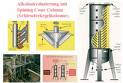 Are wineries harvesting riper? A two-year survey was conducted by the Napa County UC Cooperative Extension to determine the amount of weight loss in grapes that have experienced extended ripening. It was concluded that growers lose money when their contracted clients insist on the practice of hang time. Winemakers are trying to coax as much sugar and maturity out of the grapes as possible. But, by doing so, growers have complained that as sugar levels increase, their grapes dehydrate, which results in weight loss, and therefore clients have been getting away with paying less. A new system is being worked out to add costs to a winery once the sugar levels go past a pre-determined degree. Some vineyard owners just sell by the acre
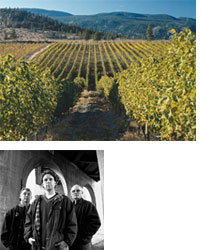
 The Cape Barren Winery is located in Brookman’s Road, Blewitt Springs in the Mediterranean-style appellation of McLaren Vale. McLaren Vale experiences moderate temperatures throughout the year, with warm and dry spring and summer days ideal for growing high quality grapes. Cape Barren soils have deep sand over ironstone and clay subsoil perfect for holding moisture. I had mentioned the Old Vine Shiraz in a previous blog. This and the GSM are blue fruit bombs. These are impressive!
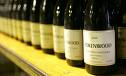 Established in 1970, Brokenwood Wines has evolved from a weekend venture for self-professed hobby winemakers into one of Australia's most reputable wine labels. Brokenwood was established by a trio of Sydney-based solicitors who then paid a record price of $970 per acre for a 10-acre block in the foothills of the Brokenback Ranges. The original block, initially planned as a cricket round for the local community (hence the Cricket Pitch blends) was planted with the Cabernet Sauvignon and later Shiraz.


 So why am I writing about marketing and branding and not the wines themselves? It’s because the Champenois are some of the most sophisticated and ruthless marketers in the world. Just try and launch a product, any product with the word Champagne in the moniker. Be prepared to be served papers and to be heading to court. The Champenois protect their region’s name fiercely, and have done so to great success. In the EU, sparkling producers can no longer state ‘Methode Champenois’ on their labels. The new term for making sparkling wine in the EU in Champagne method is now ‘Methode Traditionelle.’ Who’s to argue with the protectionist ways of the Champenois when Champagne is most likely the world's most famous wine, and one that is most associated with a celebration? Champagne is one of the few categories in French wine to actually show growth around the world. The top Champagne houses put 95% of their profits back into marketing. What other wine category do you know of where diners can be recognized for their choice across a dining room by the shape of the bottle or the color of a label? Although for me, it also makes it easy to spot the pretenders. If I spot someone drinking from an orange/yellow label from across the room, they have just been labeled as a ‘victim of marketing.’ While many French grape farmers and winemakers are protesting their government’s lack of support, the Champenois biggest problem is trying to figure out whether they will be buying a blue or silver Mercedes this year. Ok, well maybe this is a bit of an exaggeration, but have you seen the direction Champagne prices have gone since the millennium push? As it is Champagne season, we’d better get to the wines.


 Bollinger has been awarded the Royal Warrant by seven British monarchs since 1884, so Bond pledged his loyalty to Bollinger. In 1829, Champagne Bollinger introduced an instantly recognizable, dry, toasty style that connoisseurs around the globe are said to have coveted ever since. Six generations of the Bollinger family have maintained the house style, and Bollinger is rare in that it is one of the few Grande Marque houses to be owned, controlled and managed by the same family since it was founded.

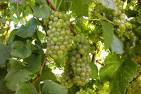 Ah, human nature. We all love the winners, yet we seem to revel in the fall from their pedestals as well. Schadenfreude, I suspect. But why pick on a poor defenseless grape? Perhaps the ‘Anything But Chardonnay’ campaign came about because Chardonnay had become so popular that people began asking for their white wine generically as a Chardonnay instead of its previous American generic moniker of ‘Chablis?’ So, just how popular is Chardonnay in the US? According to AC Nielsen, Chardonnay accounts for over 22% of the dollars that we spend in the entire wine category. 22% may not seem to be a dominant number, yet for imported white wines Chardonnay represents 32.8%. This number would be higher if it wasn’t for Pinot Grigio. For domestically produced white wine, Chardonnay’s percentage jumps to 64.7% for an import/domestic average of 50.6% in dollars of all white wine consumed in the US. These numbers even include the ubiquitous and enthralling ‘White Zinfandel.’ Apparently wine consumers have not yet received the ‘Anything But’ memo?
 Droin Chablis ‘Vaillons’ PC 2004, Retail $28.99 Warehouse