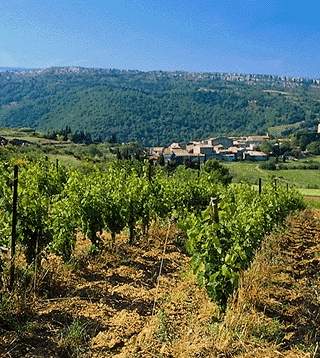
The wine business has its benefits. I had recently taken a job with the Symington family of Portugal. My job was representing the Symington Port and Madeira brands in the eastern part of the US. This was a ‘slam-dunk’ job for someone who loves Port and Madeira as the Symington Port houses are Graham’s, Dow’s, Warre’s, Smith Woodhouse, Quinta do Vesuvio, and Maderia lodges of Blandy’s, Leacock’s and Miles. The obligatory trip to Portugal for indoctrination took place in the fall of 1989. As I was working with Bartholomew Broadbent, we took the trip to Portugal via a quick stop in London. We were able to visit Bollew’s father Michael at his
  Christie’s auction house office. Must have been a typical day for Michael, there were several bottles of 19th century vintage Madeiras opened that we were welcomed to sample. Dinner that evening was at Chez Broadbent. That picture that you see in Decanter magazine of Michael Broadbent wearing his suit while standing next to a bicycle has some meaning. Michael commutes in downtown London to Christies on his bicycle nearly everyday. This trip to London was special as we were able to spend time with the man who wrote the book that I often take to my favorite restaurant (Bern’s Steak House) as a useful reference for their tome of a wine list. Michael Broadbent’s Great Vintage Wine Book is the ultimate reference guide for wines with some age with the strongest categories being Bordeaux wines and Porto in particular. This book is a great cheat-sheet when trying to navigate the hundreds of pages that make up Bern’s wine list. The next morning we were off to Oporto.
We arrived in Oporto late that morning and were off to the Symington’s offices in Vila Nova da Gaia. This is the town across the river from Oporto where most of the major port houses age their best wines. This seaside town is much cooler than it is up the Douro river where the vineyards are located. The cooler Vila Nova da Gaia cellars help wines avoid the dreadful ‘Douro Bake’ because temperatures there in the summer can easily reach over 100 degress Fahrenheit. With the lack of air conditioning up the Douro, wines could literally caramelize and hence ‘The Douro Bake.’ We tasted through about 50 Ports in the lab with Peter Symington, had a quick al fresco lunch and then went off to tour the Lodges where the ports are aged. The next day we took the old train line that travels along the Douro river. The landscape became more and more rugged as we traveled east and inland. It seemed like we were going back in time. Then it was revealed that UK students would travel here to do third world studies. At dinner that evening James Suckling was with us. The wines during dinner were a bit rustic but correct. As I mentioned in my last blog that wine tasting is a sport, decanters were routinely brought out after dinner and we would then wait in anticipation for a chance to guess the house and vintage of the port. To my amazement, JS did not even wait for his turn to guess the wine in the two decanters. He who had the most to lose made his pronouncement and unfortunately was not close. One was guessed as a single Quinta without much age on it and the other being a vintage port of 10 years greater age but the guess was slightly more than ten years off target. The blind wine was a magnum of 1966 Graham’s poured into two decanters. James Symington’s wife Penny was the only one who stated that the wines were so similar that she had a hard time telling them apart. My guess was Graham’s 1970 and 1966 as the glass I called the 1966 had more sediment in it so I though it had to be older. Obviously the second decanter was poured from the second half of the bottle where the sediment would reside. After 'pudding' we were off to watch the satellites on deck chairs overlooking the Douro in the clear night sky, anticipating our next days water skiing outing with Aussie winemaker and then Symington Family enologist, David Baverstock.
 The Douro was once a very active river flowing out to the Atlantic, but now that it has a dam the river is about as still as a bathtub. It was so calm that even I could get up on one ski. Later that day I witnessed a few of the Symingtons in a bit of a heated discussion with the staff. I wasn’t sure what was going on because my Portuguese consists of bom dia, desculpe and obrigado. After that, you can forget it. As it turned out they were discussing the water source having run out to the house and the staff had decided to hook up the house to the Douro water. As this part of Portugal was the equivalent to being in an underdeveloped country, I was soon to find out that the river was accustomed to getting all of the land’s run-off, including sewage. Apparently my system wasn’t as tough as I thought it was. Obrigado, I’ll have the bottled water please.
I had the pleasure of visiting Oporto this June for a few nights. EU money has gone a long way in Oporto. The airport is brand new and very modern. The Sheraton and Le Meridien hotels are world class. The convention center is as fancy as the airport. I was in town a wine fair which showed many of the country’s small producers. The wines and packaging have also come a long way since 1989. Below you can see some examples of the many styles of Portuguese wines that are new and happening. These wineries are all representative of the modern qualitative revolution happening in today's Portugal.
 Let me hit you with some knowledge: The region of Vinho Verde lies in Northwest Portugal. Although the region has been producing wine for centuries, it wasn’t until 1959 that the D.O. was created to establish quality controls and help to establish a sense of place for the wines from the zone. The region is characterized by gently rolling hills with some terraces.
 The Quinta do Ameal estate dates from the 1850s, but the Araujo family has owned it for just 15 years. This old estate is owned today by one of Vinho Verde’s most ambitious proponents, Pedro Araujo. When taking over the estate, one of his first projects was to turn the entire property over to organic viticulture, one of the few to practice this in the zone. I met Pedro Araujo this June in Oporto at the wine show and revisited his wines. I owe a deep amount of gratitude to Pedro as he gave me the name of a fabulous seafood restaurant where I had a late lunch after the show. Pedro is a serious winemaker, determined to show that the undervalued terroir and grapes of Vinho Verde can be harnessed to make great wines. He is particularly devoted to the Loureiro variety, which he has planted in favor of other indigenous varieties. He ferments and ages Loureiro in new French oak barrels for six months, and feels that the floral character of the Loureiro blends perfectly with the oak aromas which add to the overall complexity of his wine. For grape quality, Pedro has cut yields from 17 tons per acre to just five tons per acre, mostly through green harvesting. He farms organically, with cover crops - legumes, grasses and clover - grown between rows to loosen soils through the roots and get oxygen into earth.
Jancis Robinson, M.W. writes: Most white Vinho Verde left me pretty cold; it seemed so tart and fruitless compared to the more sumptuous Albariños and so on produced in Rías Baixas in Spain to the north But clearly this part of Portugal has been touched by wine revolution and evolution just as much as any other, and producers such as Quinta de Covela and Quinta do Ameal are in the vanguard, dragging the rest, I hope, in their wake.
This wine is fresh with both floral and pear notes, on the palate there's a mass of lemony acidity, has excellent body, is smooth yet keeps its refreshing qualities with nice length on the palate. Not your typical spritzy Vinho Verde.
Quinta do Ameal Loureiro 2004, Retail $13.99 Warehouse $9.99
 The Douro might be Portugal’s answer to Spain’s Priorat and France’s Roussillon region, is located in Northeastern Portugal. Historically, the region was the country’s port-producing center, with the city of Oporto as the worldwide seat of the port industry. Now, a few great producers are creating dry bottlings from these same grapes to startling success. Many of these parcels are field blends, with several varietals planted alongside each other.
 Quinta de Covela is a beautiful south-facing estate, formed as an amphitheatre overlooking the Douro river. Farmed organically, 19 hectares of terraced vineyards curl around the ruins of the original 16th century manor house. Since the Quinta has undertaken an organic regime in their vineyards, they feel that they are now producing some superb wines in very hot, drought vintages as "the fruit retains balance and keeps its acidity and minerality." The vines seem to absorb the shock of a tough year without showing signs of stress. All work on the Quinta is done by hand, and vinification takes place in both barriques and stainless steel vats.
Quinta de Covela (Portugal) Escolha Rosé 2004A blend of Touriga Nacional, Merlot and many others. It has a soft, sweet earth and plummy-fruited nose with the creaminess and richness of a red wine. On the palate it has some real structure with wild red fruits, a hint of spice and a nice dry finish.
Quinta de Covela Escolha Rose 2004, Retail $9.99 Warehouse $ 4.99
Quinta de Covela (Portugal) Escolha Red 2003Produced from a base of Touriga Nacional, some Cabernet Franc, Merlot and Syrah in the blend. There is plenty of lush, full berry fruit. On the palate there is a nice balance and structure with flavors of wild black fruits, black cherries and fresh menthol. Well balanced with soft tannins and a long finish.
Quinta de Covela Eschola Red 2003, Retail $21.99 Warehouse $14.99
Started in August of 2000, Lavradores de Feitoria is a collective project between 15 quality-minded Quintas in the Douro. While it is technically a cooperative venture, it is unlike a coop in many ways. Principally, there are some single Quinta wines which come from only one estate. Not all quintas produce their own wine and only 4 or 5 are chosen each year. Dirk Niepoort helped start the project and is highly involved in this.
The idea behind this novel project is to take advantage of the climatic and terroir advantages that each of the three Douro sub-regions has to offer. Some of the wines are made from only one of these zones, while some are produced from all three. The Douro Superior tends to produce wines of greater strength while the Cima Corgo and Baixo Corgo tends to produce wines with higher levels of natural acidity and elegance.
The Lavradores shows bright plum and cherry fruits, has a hint of spice on its medium textured palate. Lavradores is a fantastic value and a nice way to experiment with a wine from the Douro region.
Lavradores de Feitoria ‘Douro’ Red 2004, Retail $10.99 Warehouse $7.99
 Also from the Douro Valley is the Quinta das Hidrângeas, a perfect example of the current trend in the Douro. Hidrangeas respects the inherited traditions of the region yet is open to the latest technologies. The Quinta has preserved the harmony of its landscape by maintaining the traditional stone walls that cradle it, while reconverting a part of its vineyards.
This Douro wine was nourished by schist-covered slopes and was produced from native grape varieties Touriga Franca, Tinta Roriz, Tinta Barroca and Tinta Amarela. The grapes were de-stemmed and then crushed in a granite lagar by traditional treading. Fermented in temperature controlled stainless steel and then aged for 12 months in French oak. This wine has an incredible depth of flavors, with spicy blue and black fruits reigning supreme. We had a sample of this open for five days and it was still kicking!
Quinta das Hidrângeas ‘Douro’ Red 2001, Retail $34.99 Warehouse $19.99
Dirk Niepoort is in charge of the Niepoort winery and is the driving force behind this world-
 famous property. Dirk heads his family’s business that began making port in 1847. A fifth generation Dutchman, Dirk made his first port vintage in 1987 and has continued creating amazing port bottlings while adding dry red cuvees that have become the talk of the Douro. Dirk is known as one of the main forces behind the progression of dry red wine production in the zone and is certainly its main proponent worldwide.
What Dirk is really known for is the quality of his Tawny ports. The Tawnies have the silky expression of a supple Pinot Noir, with incredible length and complexity. If you speak to a winemaker who makes port, you will find that they are most proud of their 20 year old Tawny wines as this style really shows the skill of the blender and can be incredibly complex.
Niepoort 10 year Tawny Port, Retail $39.99 Warehouse $34.99
Niepoort 20 year Tawny Port, Retail $64.99 Warehouse $54.99
Niepoort 30 year Tawny Port, Retail $129.99 Warehouse $119.99
Niepoort Late Bottled Vintage 2000, Retail 29.99 Warehouse $24.99
Niepoort 2003 Vintage Port 375ml, Retail $44.99 Warehouse $34.99
 Pintas is one of the more exciting projects to come out of the Douro in quite some time. The project of husband and wife team Jorge Serodio Borges formerly of Niepoort and Sandra Tavares who is a winemaker in her own right. Together, they farm 2 small hectares of up to 30 different varietals, all planted alongside each other on these hillsides. There is no fancy winery, just a simple structure that allows them to make a terrific wine from their very small holdings. The vineyard is full south facing, helping to explain the dark richness of Pintas.
The Pintas 2003 Vintage Port was produced from the very intense grapes from a very warm year. This port is ripe, rich and has a savory intensity with great depth. Complex and spicy with black fruits and pepper. Extremely concentrated stuff.
Pintas Vintage Port 2003, Retail $49.99 Warehouse $29.99
And in honor of my trip in 1989, please check out our tremendous deals on bottled water:
 Pellegrino sparkling from Italy, liters retail $1.99 Warehouse $1.39
 Aquapanna still from Italy, liters retail $1.99 Warehouse $1.39
 Volvic still from France, 1.5L retail $1.89 Warehouse $1.29
Volvic still from France, liters $1.49 Warehouse $.99
Bloggy dia.........


 Let me hit you with some knowledge: Traditionally used to compensate or underripeness in cool winegrowing regions, ‘enrichment’ encompasses the addition of sugar, grape must, or concentrated grape must to a wine. Enrichment is the counterpoint to acidification which is the norm in hot regions. Sucrose is the usual enrichment material used. In northern Europe this has normally been refined sugar beet, or occasionally cane sugar.

 Domaine Saint Nicolas (Fiefs Vendeens) With vineyards just a stone's throw from the Atlantic ocean, the Fiefs Vendeens is the southernmost of the Loire’s wine growing regions, located about an hour south of Nantes (Muscadet). Domaine St. Nicolas, run by the dynamic Thierry Michon, is one of the few certified biodynamic vineyards in the Loire, and is planted to Chenin, Pinot Noir, Gamay, and other varietals planted mostly on pink slate and quartz. These wines are pure examples of terroir, often expressing the salinity of the nearby sea and the minerality of the slate on which they are planted.

 Domaine Vincent Ogereau The picture above shows Vincent Ogereau on the left, with Jon-David on the right. Just south of the Loire river from Savennieres, the area of the Anjou where Vincent Ogereau produces Chenin Blanc is composed of the same dense slate that Savennieres is planted on, giving the wine of this tiny part of the Anjou the same density and minerality. There may be some of the Anjou Blanc left in our shops. Our current arrival is the 03 Anjou rouge produced from Cabernet Franc grapes. This is organically farmed, undergoes a long maceration and spends 12 months in barrel.





 Are wineries harvesting riper? A two-year survey was conducted by the Napa County UC Cooperative Extension to determine the amount of weight loss in grapes that have experienced extended ripening. It was concluded that growers lose money when their contracted clients insist on the practice of hang time. Winemakers are trying to coax as much sugar and maturity out of the grapes as possible. But, by doing so, growers have complained that as sugar levels increase, their grapes dehydrate, which results in weight loss, and therefore clients have been getting away with paying less. A new system is being worked out to add costs to a winery once the sugar levels go past a pre-determined degree. Some vineyard owners just sell by the acre
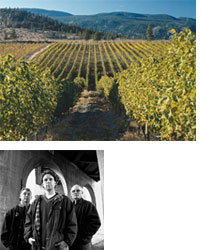
 The Cape Barren Winery is located in Brookman’s Road, Blewitt Springs in the Mediterranean-style appellation of McLaren Vale. McLaren Vale experiences moderate temperatures throughout the year, with warm and dry spring and summer days ideal for growing high quality grapes. Cape Barren soils have deep sand over ironstone and clay subsoil perfect for holding moisture. I had mentioned the Old Vine Shiraz in a previous blog. This and the GSM are blue fruit bombs. These are impressive!
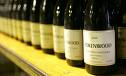 Established in 1970, Brokenwood Wines has evolved from a weekend venture for self-professed hobby winemakers into one of Australia's most reputable wine labels. Brokenwood was established by a trio of Sydney-based solicitors who then paid a record price of $970 per acre for a 10-acre block in the foothills of the Brokenback Ranges. The original block, initially planned as a cricket round for the local community (hence the Cricket Pitch blends) was planted with the Cabernet Sauvignon and later Shiraz.


 So why am I writing about marketing and branding and not the wines themselves? It’s because the Champenois are some of the most sophisticated and ruthless marketers in the world. Just try and launch a product, any product with the word Champagne in the moniker. Be prepared to be served papers and to be heading to court. The Champenois protect their region’s name fiercely, and have done so to great success. In the EU, sparkling producers can no longer state ‘Methode Champenois’ on their labels. The new term for making sparkling wine in the EU in Champagne method is now ‘Methode Traditionelle.’ Who’s to argue with the protectionist ways of the Champenois when Champagne is most likely the world's most famous wine, and one that is most associated with a celebration? Champagne is one of the few categories in French wine to actually show growth around the world. The top Champagne houses put 95% of their profits back into marketing. What other wine category do you know of where diners can be recognized for their choice across a dining room by the shape of the bottle or the color of a label? Although for me, it also makes it easy to spot the pretenders. If I spot someone drinking from an orange/yellow label from across the room, they have just been labeled as a ‘victim of marketing.’ While many French grape farmers and winemakers are protesting their government’s lack of support, the Champenois biggest problem is trying to figure out whether they will be buying a blue or silver Mercedes this year. Ok, well maybe this is a bit of an exaggeration, but have you seen the direction Champagne prices have gone since the millennium push? As it is Champagne season, we’d better get to the wines.


 Bollinger has been awarded the Royal Warrant by seven British monarchs since 1884, so Bond pledged his loyalty to Bollinger. In 1829, Champagne Bollinger introduced an instantly recognizable, dry, toasty style that connoisseurs around the globe are said to have coveted ever since. Six generations of the Bollinger family have maintained the house style, and Bollinger is rare in that it is one of the few Grande Marque houses to be owned, controlled and managed by the same family since it was founded.

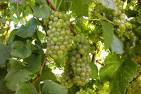 Ah, human nature. We all love the winners, yet we seem to revel in the fall from their pedestals as well. Schadenfreude, I suspect. But why pick on a poor defenseless grape? Perhaps the ‘Anything But Chardonnay’ campaign came about because Chardonnay had become so popular that people began asking for their white wine generically as a Chardonnay instead of its previous American generic moniker of ‘Chablis?’ So, just how popular is Chardonnay in the US? According to AC Nielsen, Chardonnay accounts for over 22% of the dollars that we spend in the entire wine category. 22% may not seem to be a dominant number, yet for imported white wines Chardonnay represents 32.8%. This number would be higher if it wasn’t for Pinot Grigio. For domestically produced white wine, Chardonnay’s percentage jumps to 64.7% for an import/domestic average of 50.6% in dollars of all white wine consumed in the US. These numbers even include the ubiquitous and enthralling ‘White Zinfandel.’ Apparently wine consumers have not yet received the ‘Anything But’ memo?
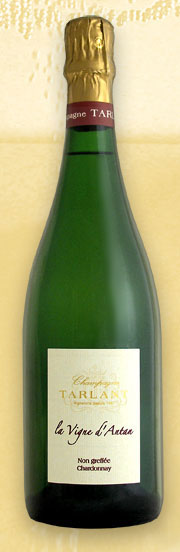
 Droin Chablis ‘Vaillons’ PC 2004, Retail $28.99 Warehouse